

“Since the elections, interest in Hungary has noticeably increased in Taiwan”

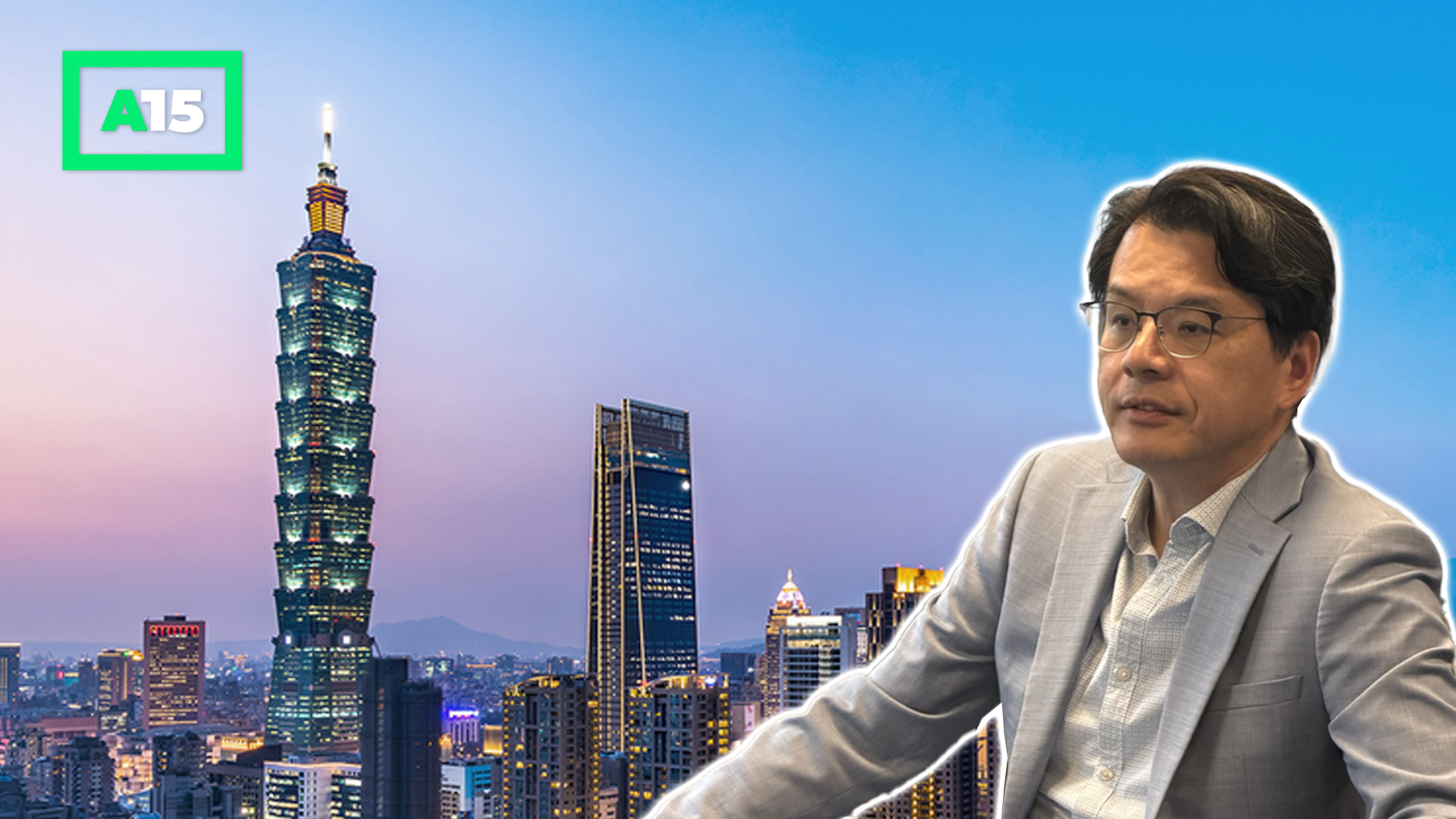
The Hungarian elections received prominent news coverage in Taiwan, which has sparked renewed interest among investors, Eliott Wang, head of the Taipei Representative Office in Budapest (which represents the Republic of China in Hungary), told Átlátszó. Although Hungary was once Taiwan’s most important partner in the region, in recent years neighboring countries have taken the lead in economic cooperation, particularly in the chip industry, which is fueling the AI boom. The head of the Taiwanese mission also spoke about the island’s democratic transition, the military and diplomatic threats posed by China, and relations with the United States.
Eliott Wang is Representative at the Taipei Representative Office in Hungary. He has been in the foreign service since 1998 with previous experience focusing on North American Affairs, diplomatic training, and public diplomacy. He has also been stationed in Washington DC, Brussels and Atlanta. He has attended training programs at Oxford University, The Harvard Kennedy School, and Taiwan’s National Academy of Civil Service.

Átlátszó: Few people know that the Taipei Representative Office in Budapest (due to Taiwan’s unrecognized status, Taiwanese missions use this title instead of ‘embassy’ – ed.) performs functions not only in Hungary, but also covers several countries in the region. How did Hungary become such a prominent partner for Taiwanese government?
Eliott Wang: Hungary occupies a special place in Taiwan’s Central and Eastern European relations. After the fall of Communism, Hungary was the first former Eastern Bloc state to establish relations with Taiwan. In the following period, Hungary became the fifth largest European market for Taiwanese investors.
However, the growth of investments stopped shortly before the COVID epidemic. While this was happening,
Hungary’s neighbors, especially V4 countries, have picked up economic relations with Taiwan significantly over these years.
We hope that the 70th anniversary of the 1956 revolution this year will provide a good opportunity to refresh relations.
Few people know that in 1956 the Taiwanese government also sent aid to the Hungarian refugees, and a social movement was initiated in Taiwan to donate aid and drive support for Hungary. This year, we are preparing commemorations and exhibitions about these events together with the Hungarian Representation in Taipei and Hungarian civil organizations.
What are the relations between neighboring countries and Taiwan?
Taiwanese investors and state organizations see a lot of opportunities in the Central and Eastern European region, and have created significant investments and cooperation agreements in other Visegrád countries since COVID. For example, a semiconductor research center has been established in the Czech Republic, while Taiwan and Poland are working together to build a scientific park in Poland. These cooperation efforts aim to combine Germany, Poland and the Czech Republic as a golden triangle for semiconductor industry supply chain.
Due to the AI boom, the role of the Taiwanese semiconductor industry is becoming crucial in Europe. As demand for semiconductors grows, Taiwan’s chip manufacturing is transforming. Its previous business model was based on manufacturing chips in Asia and then exporting them to the United States and Western Europe, but this is becoming less sustainable. In many cases, it has become more economical to move production closer to the receiving markets, which is why
Taiwanese semiconductor industry investments are also appearing in the United States and EU countries
such as Germany, the Netherlands and Italy. Hungary has become the next thriving partner of Taiwan as Foxconn has great potential to become the 3rd largest company in terms of revenue in Hungary only next to MOL & MVM by producing AI servers.
What has changed since the elections in Hungary, and what do you expect from the new government?
The foundations for our bilateral relations are already in place; for example, in the past years we have developed a strong relationship with different municipalities, and we cooperate with non-profit and educational institutions. The people-to-people exchanges are frequent and close as there are so many marriages, students and cultural exchanges between our two sides.
In Taiwan, interest in Hungary has noticeably increased since the elections.
The elections were also prominently featured in the news there, and many are interested in how the public mood has changed
and what the new government is going to do. Investors want to learn about the opportunities offered by the Hungarian market in the new era. Now it’s time to deepen our economic relations.
In what areas has Taiwan managed to maintain cooperation with Hungary over the past years?
Basically, the programs that we launched earlier have never stopped. These include, for example, scholarship programs. In Hungary, the Stipendium Hungaricum offers opportunities for Taiwanese students, and in Taiwan, various ministries also operate their own scholarship programs that are available to Hungarians. These cooperation programs have remained for many years.
Taiwanese companies in Hungary also continued to contribute to the economy. This year, the Foxconn Komárom factory is getting more orders than ever before, this single factory’s share in Hungarian export growth has already surpassed that of the entire battery industry.
Taiwan was governed by a one-party regime for decades, and the democratic transition took place at the turn of the 80s and 90s, roughly at the same time as in Hungary. Today, the stability of Taiwan’s democracy and the state of freedoms are highly rated by most international observers. What could be the reason for the successful transition?
Taiwan’s democratic transition was the result of a gradual process spanning several decades. It began with the lifting of restrictions on the press and on freedom of association, followed by the legalization of opposition parties. When the former ruling party lost power for the first time in 2000, Taiwanese society had already reached a broad consensus that election results should be respected and that political power should be transferred peacefully.
Today, Taiwan is a strong democracy, and there is no public support for the country to return to the period of dictatorship.
After the elections, a completely new political and electoral system will probably be formed in Hungary. Speculations have already begun as to what kind of system would be ideal. Are there any positive examples in Taiwan’s political system that might be worth looking into for inspiration?
One of the most important aspects of Taiwan’s electoral system is its simplicity and transparency. Elections are basically decided in a simple majority system. Since there are basically two major parties competing in Taiwan, both sides regularly hold primaries. For this reason, the final election usually involves two candidates who have already proven that they have significant support.
In addition, the Taiwanese political system is generally less centralized, and city and village governments have a great deal of autonomy, including in financial matters. Of course, there are also disputes in Taiwan between the central government and local governments, mostly about the distribution of the state budget, but I think this is a common issue in every democratic country.
The previous Hungarian government’s “opening to the East” had been a feature for a long time, but in recent years, as the American-European relationship has become more problematic, it has been suggested in other EU countries that it would be worthwhile for the EU to establish closer economic cooperation with China. Are such movements really visible?
As a matter of fact, some countries used to see China more as a partner than they do now. Yet it has now become clear to them that the security of the Taiwan Strait affects the trade and stability of the whole world. Accordingly, the presence of European countries in the region has also increased. For example,
Germany, the United Kingdom, France, Italy and the Netherlands sent warships to conduct Freedom of Navigation Operations through the Taiwan Strait.
In July, China’s so-called “Ethnic Unity Law” went into effect; one provision of this law allows Chinese authorities to crack down on critics of the regime even abroad – a development that European countries also find extremely alarming, as its application would constitute a serious violation not only of human rights but also of national sovereignty.
Let’s talk a little about Taiwan’s security situation. Since the re-election of Donald Trump, the concern that the United States would leave the island alone in the event of Chinese aggression, or that it would be ready to make some kind of deal with China at the expense of the Taiwanese, has often appeared in Hungarian public discourse. Do you think Taiwan’s situation has really become more precarious in recent years?
The American-Taiwanese relationship is unique and historical. One of the bases for this is the “Taiwan Relations Act”, which creates a very special situation in that
an American domestic law stipulates that the duties of the American government include maintaining Taiwan’s defense capabilities and ensuring peace across the Taiwan Strait.
Therefore, Taiwan enjoys staunch support from both sides of the aisle in U.S. Congress and Government. This long-term partnership is described as rock-solid.
In Taiwan, people are confident that good American relations will continue in the future. Moreover, cooperation is not limited to military issues. Commercial and industrial relations are also getting closer as we see TSMC keeps expanding its semiconductor factory and village in Arizona.
However, Taiwan does not want to depend solely on US support. Taiwan is also strengthening its own self-defense capabilities, with submarines, fighter jets, and missile systems playing a fundamental role.
Other countries in the region are also increasing their military spending, including the Philippines and Japan. Japan is also developing closer military cooperation with the countries in that region. How does this preparation affect Taiwan?
China’s political and military expansion poses a threat not only to Taiwan but also to its neighboring countries. China’s territorial claims over the Taiwan Strait, the South China Sea and the East China Sea have also raised serious concerns from countries beyond East Asia, as more than 50% of global trade goes through these open seas annually. This is the main reason why these countries are increasingly looking for cooperation. And it has also brought them closer to Taiwan, as they recognize Taiwan’s strategic position and deep understanding of China.
Have you experienced Chinese diplomacy putting pressure on your office, or Hungarian to stifle bilateral relations between Taiwan and Hungary?
China tries to put pressure on Taiwan on all fronts, as well as on countries that work with Taiwan. This is a common practice worldwide, and it would be surprising if there is any exception. However, we are seeing more and more countries strengthening their cooperation with Taiwan because of our strategic location at the heart of the Indo-Pacific, our indispensable role in global trade and technology, and our shared commitment to democracy, freedom and rule of law.
Interview by Zalán Zubor. The hungarian version of this article can be read here. Cover photo by the Taipei Representative Office in Budapest
Share:
Your support matters. Your donation helps us to uncover the truth.
- PayPal
- Bank transfer
- Patreon
- Benevity
Support our work with a PayPal donation to the Átlátszónet Foundation! Thank you.
Support our work by bank transfer to the account of the Átlátszónet Foundation. Please add in the comments: “Donation”
Beneficiary: Átlátszónet Alapítvány, bank name and address: Raiffeisen Bank, H-1054 Budapest, Akadémia utca 6.
EUR: IBAN HU36 1201 1265 0142 5189 0040 0002
USD: IBAN HU36 1201 1265 0142 5189 0050 0009
HUF: IBAN HU78 1201 1265 0142 5189 0030 0005
SWIFT: UBRTHUHB
Be a follower on Patreon
Support us on Benevity!
