

Historic Hungarian castle bought by István Tiborcz’s late Saudi business partner is in disastrous condition

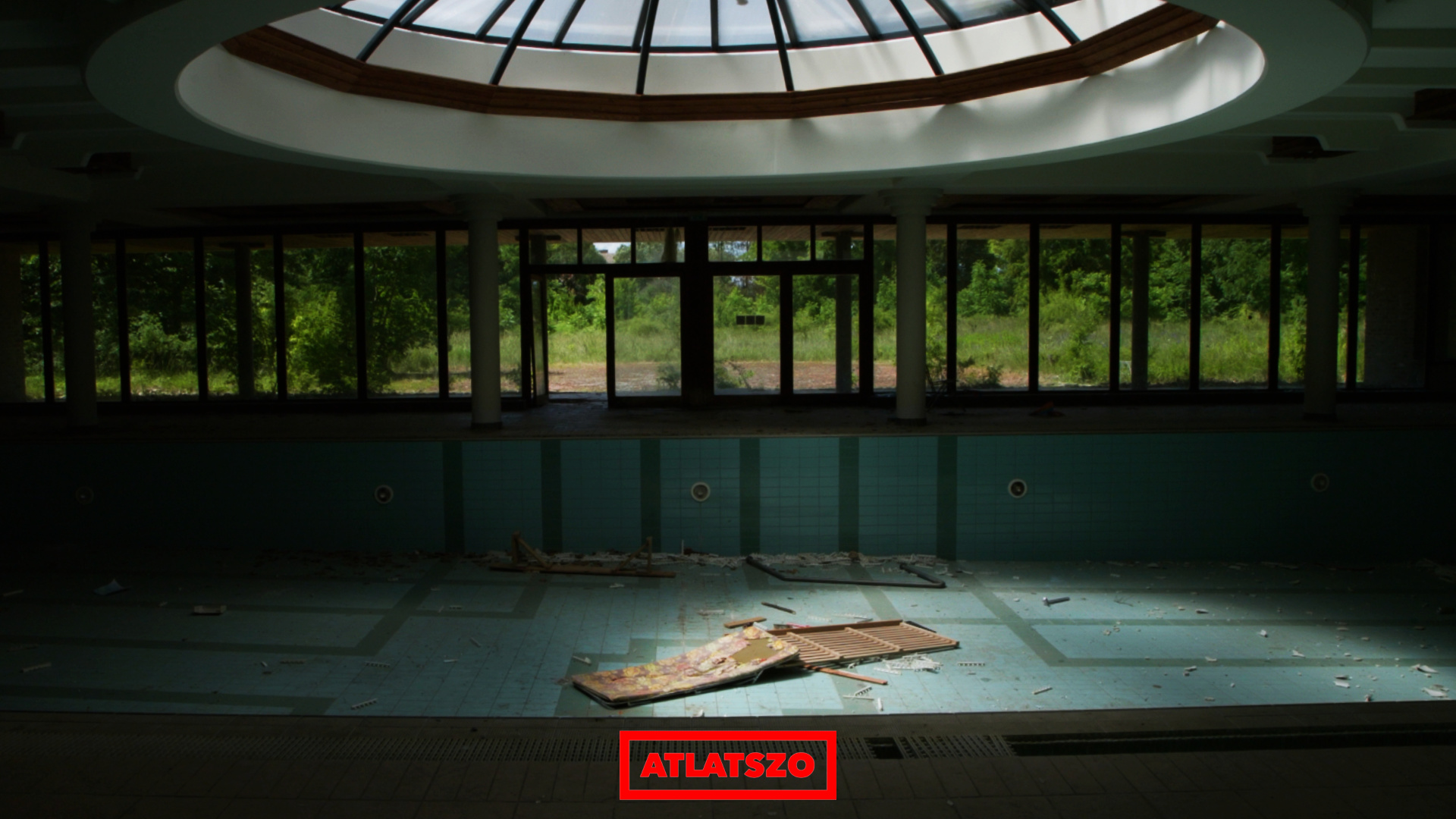
Broken windows, walls covered in graffiti, a crumbling ceiling, and a leaky roof—this is the sight that greets visitors to the Baroque castle in Hőgyész. Or rather, this was the scene until last week, when the gates were closed; since then, a security firm has been barring visitors from the 18th-century building. The Apponyi Castle, which had previously been purchased by the late Saudi billionaire Ghaith Pharaon, fell into disrepair during a lengthy legal dispute following Pharaon’s death.
Ghaith Rashad Pharaon, a Saudi businessman once wanted by the FBI and Interpol, turned up in Hungary in 2015. At the time, we covered the case extensively: even though the Hungarian government was aware of the Saudi billionaire’s background (banks owned by him were at the center of investigations concerning fraud, terrorism financing, arms trafficking, and other crimes), he was able to secure major business deals in Hungary.

Pharaon’s companies acquired the Postabank building in the center of Budapest, as well as several historic castles in the countryside. Ghaith Pharaon also made deals with István Tiborcz, the son-in-law of the former prime minister.
One of his companies even purchased a villa right next door to Viktor Orbán’s residence.
When Pharaon died in 2017, his assets became the subject of a long legal battle between his children and his lawyer and frontman, a Jordanian man named Ammar M. A. Abu Namous. The uncertainty arose because Pharaon’s Hungarian assets were not owned directly by him, but by shell companies registered in Hungary by Abu Namous, who, after Pharaon’s death, renamed the companies, removing the late businessman’s name.
On paper, Abu Namous remains the legal owner of Pharaon’s assets, including the 18th-century castle once used by the Apponyi noble family. However, during the legal dispute, the castle was not properly maintained. As early as 2021, Magyar Narancs weekly paper reported that the castle grounds were covered in meter-high weeds and that thieves had broken into the castle and stolen bathroom fixtures. The situation continued to deteriorate in the following years:
in 2024, someone removed the roof tiles to steal the copper roofing, leaving the castle’s interior exposed to rain.
The Hőgyész local government tried to address the situation on its own, maintaining the grounds at its own expense, but it could only do so much. According to the mayor, renovating the roof alone would cost at least 30 million HUF (EUR 85,000). Today, the damage is so extensive that more than three times that amount would have to be spent on the roof alone.
Restoring the castle to its former glory would cost even more.
When we visited the historic building, it was clear that the castle (and the adjacent building called Elízium) had been completely ransacked: copper pipes and wiring had been stripped from the walls. The castle hotel, once famous for its thermal waters and wellness services, now stands with broken windows and moldy, water-stained walls, some of which are close to collapsing.
Owner was fined for over 2,8 million euros, did not pay
This neglect, of course, violates building codes and preservation laws, and the owner, Calor Property Management Kft. (formerly Pharaon-Beta Kft.), has received fines totaling nearly one billion HUF (EUR 2.82 million). To date, the owner has neither paid the fines nor ensured the proper maintenance of the historic building.
Although national authorities may legally be permitted to carry out maintenance work at the owner’s expense, this has not happened because the government office has been unable to secure the necessary budgetary funding.
By the end of 2025, the Hungarian press reported that the castle might return to state ownership
due to its ongoing deterioration. However, this has not yet happened. In response to an inquiry from Átlátszó, the government office stated that, following the conclusion of the inheritance case, it had communicated with the owner, “who intends to pay the previous fines and begin preservation work.”
Trouble started when Pharaon acquired the historic monument
The Apponyi family purchased the castle in 1773—according to legend, with royal permission—from Count Claudius Florimundus de Mercy. Géza Apponyi subsequently had the castle rebuilt and restored by Miklós Ybl, the architect best known for designing the Hungarian State Opera House. In 1939, the building was transferred to the National Social Security Administration;
later, it served as a resort, an archive, a children’s home, and even a refugee shelter.
Since the 1980s, the castle functioned as a hotel: the ground floor housed a café and restaurant, while the basement contained a wine bar and kitchen. After high-quality thermal water was discovered on the castle grounds, a wellness area was added, complete with pools, saunas, and a steam room.
However, tourist numbers declined during the 2008 recession, and by 2010 the company that owned the hotel, Hermelin Zrt., had gone bankrupt. Subsequently, the castle passed through the hands of various owners before eventually coming under the control of Ghaith Pharaon and his frontman in 2015.
We contacted Ammar M. A. Abu Namous, the owner of Calor Property Management Kft., via the company’s official email address. We wanted to learn about his plans for the castle now that the legal dispute had been resolved, but we received no response. Last week, however, he had the castle gates locked and hired a security firm to guard the building.
Written by Rita Szabó-Gödri, video and photo by Bence Varga, translation by Zalán Zubor. The Hungarian version of this story is here. Cover photo: The empty pool in the castle’s wellness area.
Share:
Your support matters. Your donation helps us to uncover the truth.
- PayPal
- Bank transfer
- Patreon
- Benevity
Support our work with a PayPal donation to the Átlátszónet Foundation! Thank you.
Support our work by bank transfer to the account of the Átlátszónet Foundation. Please add in the comments: “Donation”
Beneficiary: Átlátszónet Alapítvány, bank name and address: Raiffeisen Bank, H-1054 Budapest, Akadémia utca 6.
EUR: IBAN HU36 1201 1265 0142 5189 0040 0002
USD: IBAN HU36 1201 1265 0142 5189 0050 0009
HUF: IBAN HU78 1201 1265 0142 5189 0030 0005
SWIFT: UBRTHUHB
Be a follower on Patreon
Support us on Benevity!
