

“Vampires don’t like sunlight” – how volunteer poll watchers stopped the vote-buying machine

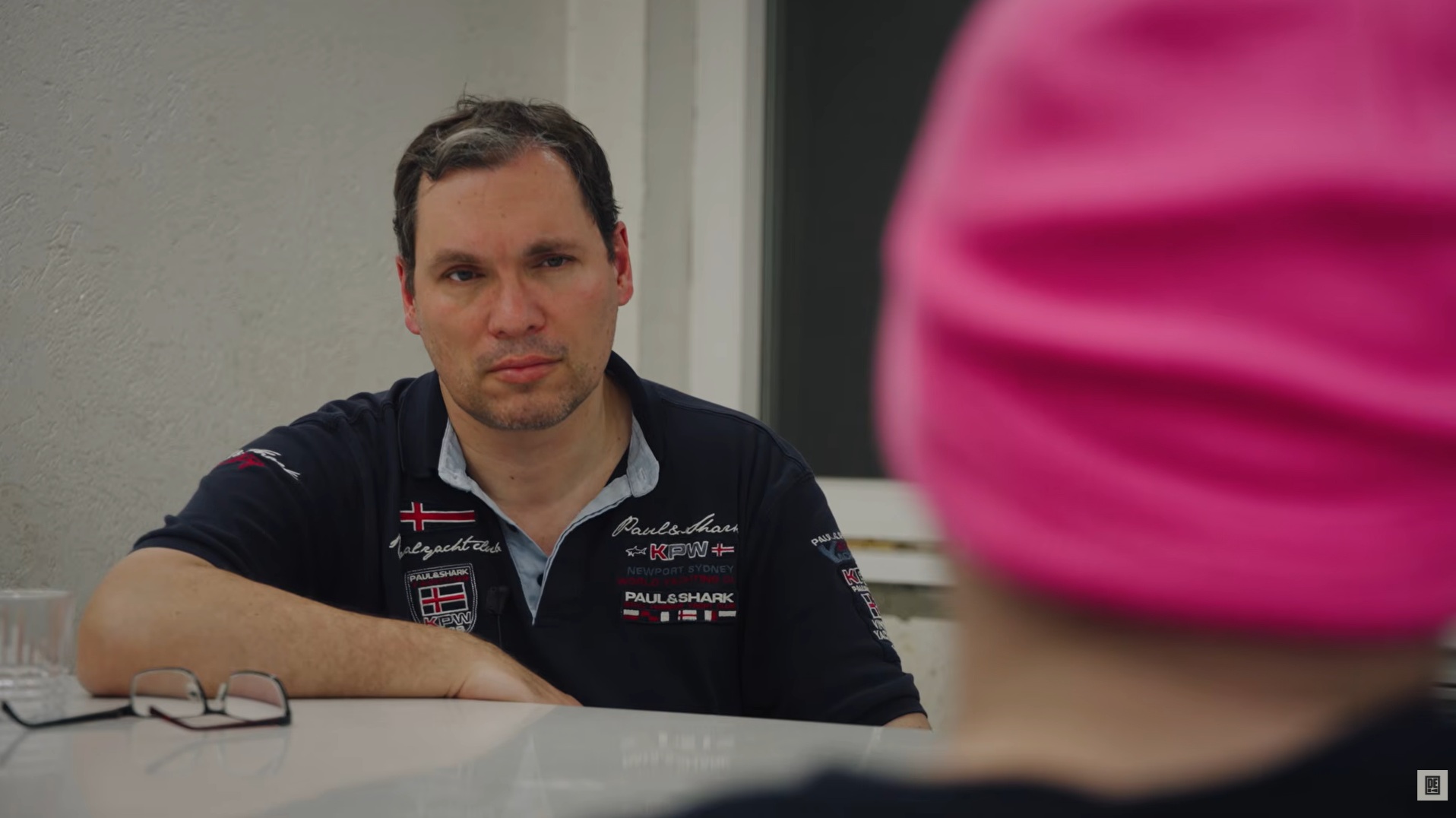
The documentary ‘The Price of a Vote’ released before the election exposed election fraud and vote-buying in Hungary. The De! Action Group, which produced the film, did not stop there: they formed a network of poll watchers which paralyzed the system of vote-buying with an unprecedented civil action. We spoke with the film’s creator and producer, Áron Tímár, head of the De! Action Group, about how the volunteer network was built, why the participants were afraid, and how the most vulnerable voters are being blackmailed.
Átlátszó: How did this all start? Did you begin investigating, and then come up with the idea to make a film out of it, or was it the other way around?
Áron Tímár: The investigation came first. We started laying the groundwork in the summer, but the work really intensified in October. We spoke with a lot of people and brought in activists and journalists who already had local networks and were well-established in the community. Átlátszó had also covered this marginalized topic several times, and we used your archives. One of the journalists we brought in was Tamás Bod from Magyar Narancs, who wrote a major piece on this in January. We had to build a network of trust so that people would dare to speak up. It was very important that, through mutual contacts, they vouch for us and assure them they could trust us. We knew that the other side – the vote-gathering machine – also relies on networks: the local power elite, the Roma minority local government network, and the municipal network of connections.
But in many places, they also rely on loan sharks, drug dealers, pimps, and cigarette smugglers,
who have influence, networks, and clients within local communities.
What was your original goal with the film?
Á.T.: The film was always just a tool, not the end goal. Our plan was to use the film to start a movement, bring this ignored topic into the public discourse, and build a network of watchdogs to monitor the elections. We thought the vote-buying machine would carry out the operation, and we would present this live to the public to show that if the success of the vote-buying operation is measured in votes, then its cost must also be paid in votes. But in the end, things turned out quite differently than we planned.
How difficult was it to get people to publicly own their stories?
Á.T.: It was incredibly difficult. Hungary is a world of fear, and this isn’t just true of the isolated villages in Borsod (Northeast Hungary), but of Budapest as well.
I couldn’t list nearly half of my crew in the film’s credits because they were afraid of negative consequences.
Even our two internationally renowned editors only dared to take on the job under pseudonyms. It was a huge struggle to get the 11 or 12 people featured in the casting video to agree to appear on camera. At the same time, we experienced a tsunami of goodwill: countless people reached out, wanting to help. When we started filming, we didn’t even have a director – just two guys with a camera. Then, as the interviews piled up, our faith in the project grew.
In the end, you recruited 2,100 volunteers – or “lookouts,” as you call them – for election day. Did the volunteers receive any training?
Á.T.: Yes, we did it in two ways. On the one hand, we wanted to familiarize them with past experiences, so they completed a training program previously developed by TASZ and CKA (Civil College Foundation) – with whom we’ve worked since the beginning. But this alone wasn’t enough, since this method hadn’t led to a breakthrough in the past. We supplemented this with our own method, which was based on radically increasing transparency and the power of public presence.
We didn’t want our volunteers to be wearing bright orange vests visible from miles away, because uncertainty works much better. If people don’t know exactly who is approaching them, they are more afraid. We thought in terms of larger groups of ten; our peaceful, larger-scale presence had the desired effect. The lookouts were friendly, and in many places, we managed to build good relationships with the local residents. When a large group shows up in an affected town and three cell phone cameras are rolling at once, it’s a radically different situation than what they’re used to. The local strongmen, who had previously run rampant, simply recoiled from the radical transparency.
What happened on election day?
Á.T.: Transparency and the presence of civil society simply brought the system to a standstill. We had more than 2,100 volunteers, Tisza had 2,250 poll watchers, and other groups were present as well.
This peaceful but unmistakable presence paralyzed the system.
They didn’t dare to go through with the vote-buying because they were afraid of being filmed and that, in the changed political climate, this would have legal or political consequences.
There was one town, Tiszavasvári, where the mere presence of a single motorcyclist on patrol was enough to stop the vote-buying. A man in his 60s, dressed in leather and riding a Harley, showed up, parked by the roadside, and the locals thought he was a police officer. They started asking him what he was doing there and why he was causing fear, and eventually the vote-buying stopped. A single motorcyclist was able to prevent the purchase of hundreds of votes.
Where did the money for vote-buying come from? Was it possible to trace its path?
Á.T.: I can’t give specific details, but we knew in which towns the money was and who had it. It usually arrived in bundles of 50 to 60 million. One of our informants told us that the money was brought in under police escort, even during the previous election. When the network shut down on April 12, the dealers realized it was better for them to keep the money rather than distribute it. Interestingly, local corruption and the interests of democracy coincided at this point: none of us wanted the money to reach the public. By then, it was becoming clear that the political climate had changed, and starting April 13, we might no longer have to account for this money.
How did this kind of local feudalism develop?
T-Á.: Vote-buying existed in the 2000s as well, but on a completely different level. Back then, central power was much weaker, checks and balances were in place, and local governments were significantly stronger and more independent. Back then, the carrot approach dominated.
Today, the stick is more important: suppression and intimidation. A significant number of mayors are forced to follow a predetermined path.
They no longer primarily represent their own constituents but act as an extension of the regime.
The development of the municipality and its financial situation both depend on the central government. Before elections, mayors receive directives and specific targets regarding the expected number of votes. Those who fail to meet these targets are literally reprimanded by the local constituency chairman’s staff. There are constituencies where every single mayor has signed a pledge to support the Fidesz candidate. This is feudalism on an astonishing scale.
The film also touches on some very brutal blackmail tactics. What was the most extreme thing you came across?
Á.T.: The most extreme stories aren’t even in the film, because we had to gauge what the audience could handle. For example, we barely touch on the use of drugs as currency, because we felt that many people wouldn’t even believe it. But we kept the story about the children in because we felt it was very important. There was a family who asked the local government for firewood in January, during the coldest part of winter. The mayor said they weren’t entitled to it, and
at 8 a.m. the next morning, he sent child protective services to their home with the threat that if they didn’t have proper heating, their children would be taken away.
This is institutionalized intimidation.
Medical care is weaponized in the same way: In Nyírbogát, for example, at the mayor’s suggestion, they shut down one of the family doctor’s practices to create a monopoly so that everyone would depend on them. The 84-year-old former family doctor, Dr. Dinkó, recounted in detail how her practice was shut down.
Many people think that vote-buying only affects Roma people. Is that what you saw as well?
Á.T.: That’s exactly the stereotype we wanted to avoid. This isn’t just a Roma issue. Vulnerability doesn’t only affect Roma living in extreme poverty. That’s why we focused our film on Nyírbogát, a town where 95 percent of the population is non-Roma. The essence of the system is to create dependency: they blackmail people with public work opportunities, social firewood, welfare benefits, or even child welfare services.
Did your volunteers face any attacks on election day?
Á.T.: Yes, we were constantly followed and chased by cars. In Tiszabura, someone smashed the window of one of our cars and scratched the vehicles. There were also very tense situations in Nyírvasvári, Nyírmihálydi, and Pirics, with tension building for hours. Fortunately, no serious personal injuries occurred on April 12. Our mere presence – the fact that three cell phones were simultaneously recording the events – caused many local strongmen to back down.
After election day, several acts of violence and death threats occurred.
In Nyírlugos, a local volunteer assisting the guards was attacked by three people on the street; they struck him on the head with a hoe,
leaving a 7-centimeter gash on his head. Our Action Group stands by every member of the team; we support them, and in specific cases, we organize media coverage, reach out to local mayors and police chiefs, and do everything in our power to ensure that these acts of intimidation come at a legal and reputational cost. We will not tolerate these attacks in the future. We must erase these old precedents from our world.
What will happen to the locals who spoke out in the film? They’re the ones who risked the most.
Á.T.: They’re under constant pressure. One of our interviewees had the mayor try to bribe his relatives – he was offered ten million forints just to retract what he said and claim the whole thing was a lie. But he stood his ground because the truth matters to him. Of course, we’re helping – we’re organizing their legal defense and collecting donations for them. We can’t just let this slide. Vampires don’t like sunlight – this gray-area operation must be exposed.
Written by Zsuzsa Zimre, translated by Zalán Zubor. The Hungarian version of this story is here. Cover image: The price of a vote (Hun.: A szavazat ára , available on YouTube )
Share:
Your support matters. Your donation helps us to uncover the truth.
- PayPal
- Bank transfer
- Patreon
- Benevity
Support our work with a PayPal donation to the Átlátszónet Foundation! Thank you.
Support our work by bank transfer to the account of the Átlátszónet Foundation. Please add in the comments: “Donation”
Beneficiary: Átlátszónet Alapítvány, bank name and address: Raiffeisen Bank, H-1054 Budapest, Akadémia utca 6.
EUR: IBAN HU36 1201 1265 0142 5189 0040 0002
USD: IBAN HU36 1201 1265 0142 5189 0050 0009
HUF: IBAN HU78 1201 1265 0142 5189 0030 0005
SWIFT: UBRTHUHB
Be a follower on Patreon
Support us on Benevity!
