

Amidst anti-Ukraine campaign, Orbán’s favorite military company teams up with Ukraine’s suppliers

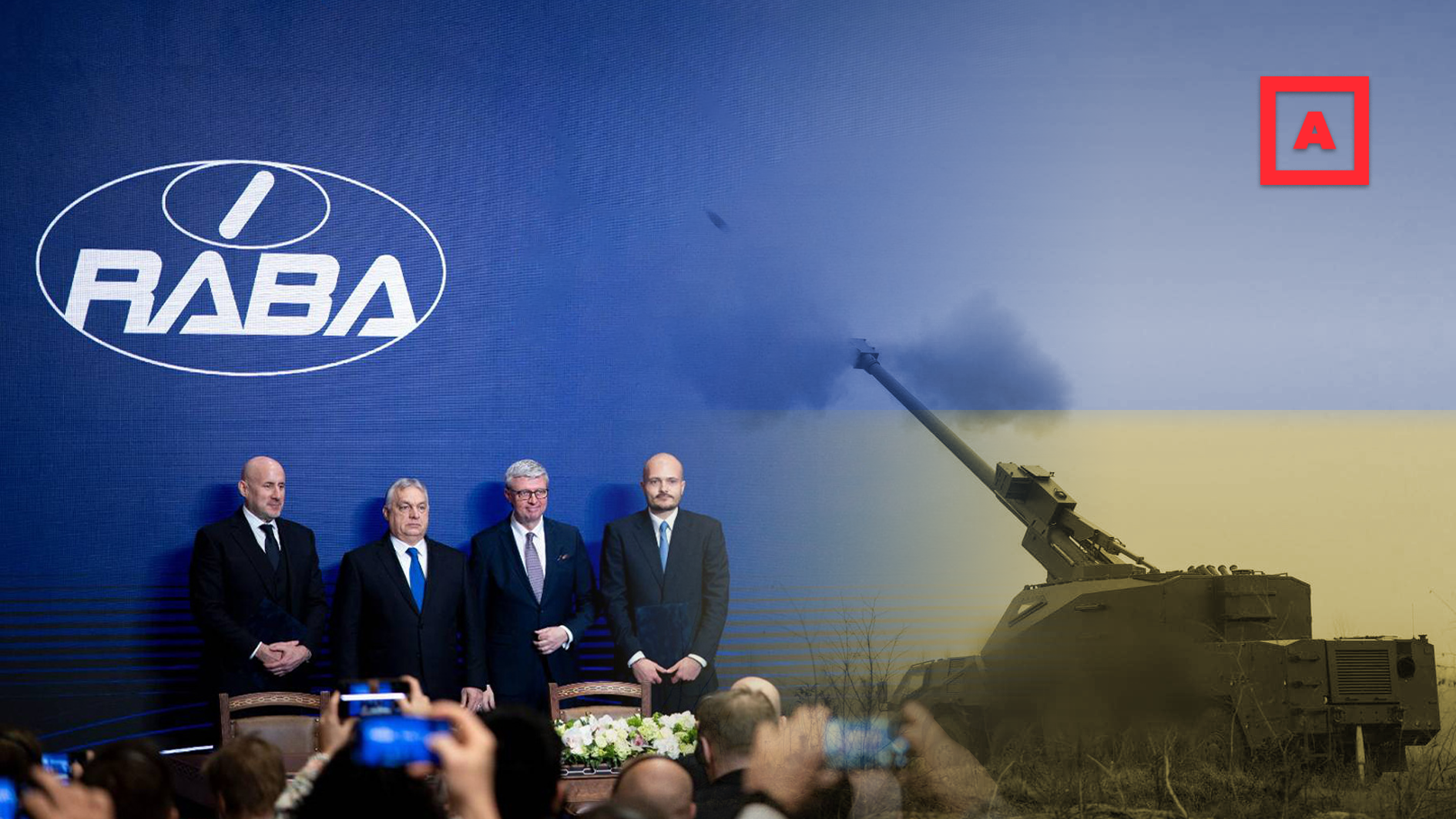
Viktor Orbán is staking his reelection on an anti-Ukraine campaign bordering on incitement that includes threatening voters with an armed Ukrainian attack, even mobilizing the armed forces to “defend” power plants which, according to Orbán, could be targeted by the Ukrainians. At the same time, he welcomed the investment of four companies in the Hungarian military industry that are also key suppliers of the Ukrainian armed forces. 4iG, the firm that now controls most of Hungary’s defense industry, is partnering with the Czechoslovak Group, which has just started production of artillery shells in Ukraine this year, and its subsidiaries that produce all the key components for Ukraine’s self-propellered guns.
Although the deal was made by mostly private companies, Viktor Orbán also gave a speech at the event where the 4iG Space & Defence Technologies Plc. (4iG SDT) announced a strategic deal with four foreign defense firms. In addition to Nurol Makina and Lockheed Martin, 4iG Space and Defense Technologies Zrt. has signed a deal with the Prague-based Czechoslovak Group (CSG) and its subsidiary Tatra Trucks, the latter of which has now acquired a 37% stake in the Rába truck factory, one of the last remaining Hungarian-owned military industry plants.

“The cooperation between the Czech Tatra Trucks and the Hungarian Rába’s owner 4iG is an important development in itself, but for the Hungarian government this deal means more, because for us it is part of a comprehensive geopolitical strategy,” said Orbán.
Behind the triumphant communication is the fact that CSG’s investment will further reduce Hungarian influence in the domestic arms industry.
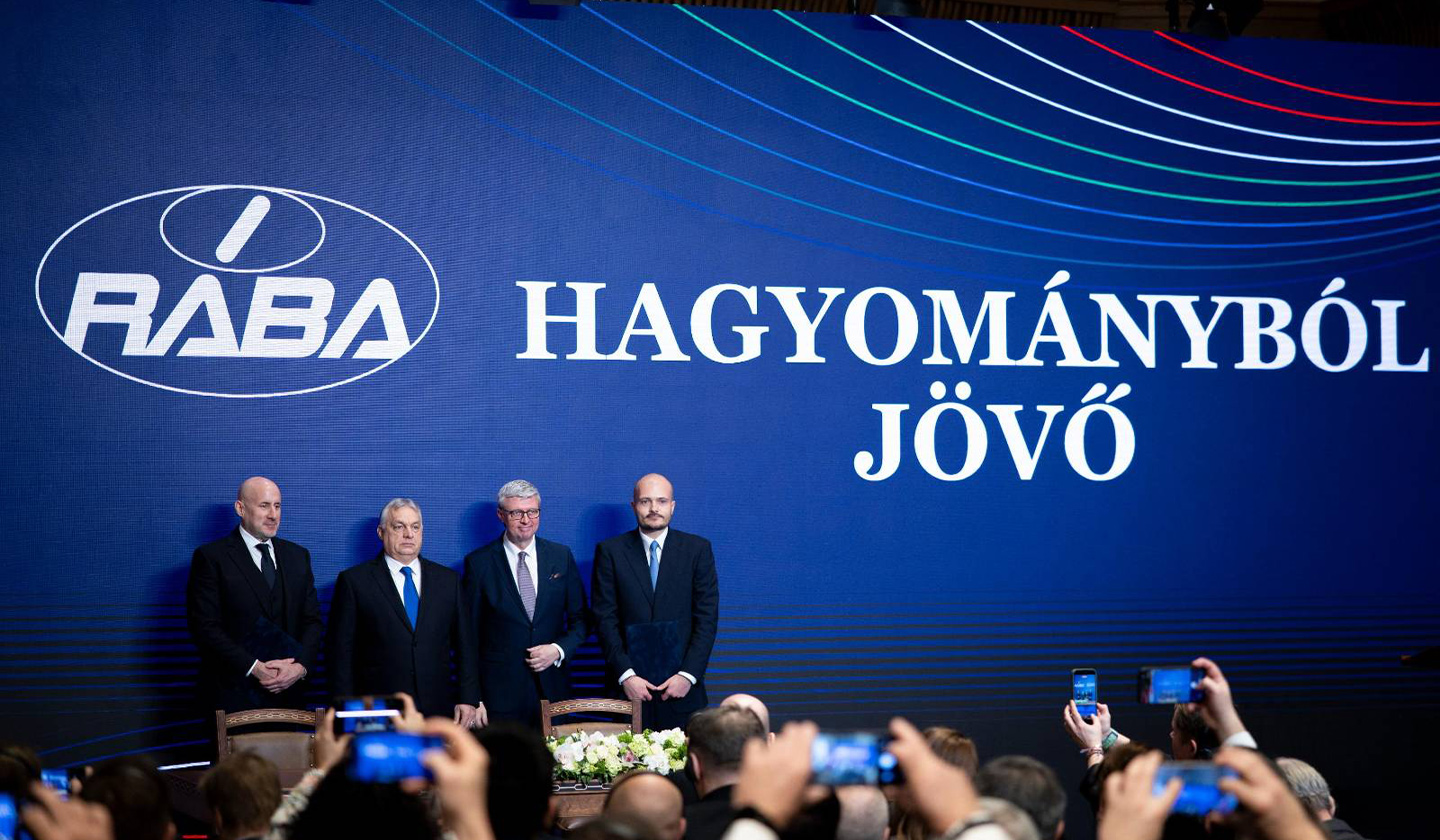
Viktor Orbán announcing the 4iG deal. Source: miniszterelnok.hu
Last year, the Hungarian Ministry of Defense privatized almost the entire military industry that remained in state hands. The opening act was the sale of shares in the Czech aircraft manufacturer Aero Vodochody to Hungarian investors. This was followed by a privatization of the order of hundreds of billions, during which 4iG, which emerged as one of the most powerful NER companies in recent years, bought the majority ownership of the state-owned N7 Holding, the asset manager of the Ministry of Defense. N7 included companies such as the small arms manufacturer Arzenál Kft., the Aeroplex Kft. aircraft maintenance company, and the Hungarian state’s share in joint ventures with large foreign arms manufacturers such as Rheinmetall, Colt CZ, and Airbus.
Initially, Rába Plc. remained state-owned, but a few months later the long-established truck factory was also sold to 4iG. With the new deal, CSG has acquired 37% of Rába.
After this wave of privatization, there are hardly any significant, purely Hungarian-owned defense manufacturers left in Hungary. Only a few companies providing technical support and maintenance remained under the defense ministry’s control, while the Hungarian private defense sector has few notable companies. Giving away the large, state-owned companies increased Rheinmetall’s influence in the Hungarian defense industry, since the German defense giant owns over 25% of 4iG.
Such a large foreign influence in a country’s defense industry is unique in the region: Romania, Slovakia, and Bulgaria have also retained their large arms manufacturing companies, mostly state-owned. This “geopolitical strategy” stands in stark contrast to the government’s rhetoric emphasizing sovereignty.
First ammunition factory opened in Ukraine
An even greater contradiction is that the Czechoslovak Group (CSG), which is now entering the Hungarian military industry, has become a major supplier to Ukraine, a country branded as a hostile nation by the Hungarian government’s propaganda.
According to CSG, Ukraine was the company’s largest market in 2025, with more than a quarter of their revenue coming from Ukrainian military orders last year.
This is one of the reasons why CSG began outsourcing production to Ukraine two years ago. In 2024, the company signed a cooperation agreement with the Ukrainian arms manufacturer Ukrainska Bronetechnika to produce artillery ammunition at military plants in part in Ukraine and part in the Czech Republic.
This is one of the reasons why CSG has begun outsourcing production to Ukraine. In 2024, the company signed a cooperation agreement with the Ukrainian arms manufacturer Ukrainska Bronetechnika to produce artillery ammunition at military plants in part in Ukraine and part in the Czech Republic.
CSG’s 2024 announcement states:
“Czechoslovak Group by this step confirmed its intention to establish cooperation with Ukrainian companies in the field of artillery ammunition and to assist the invaded country in the production of this type of ammunition on its territory. (…) The production of ammunition will take place in the Czech Republic and Ukraine with the aim of increasing and accelerating production for the Ukrainian army and reducing the price of artillery shells. The production will cover several types of large caliber ammunition.”
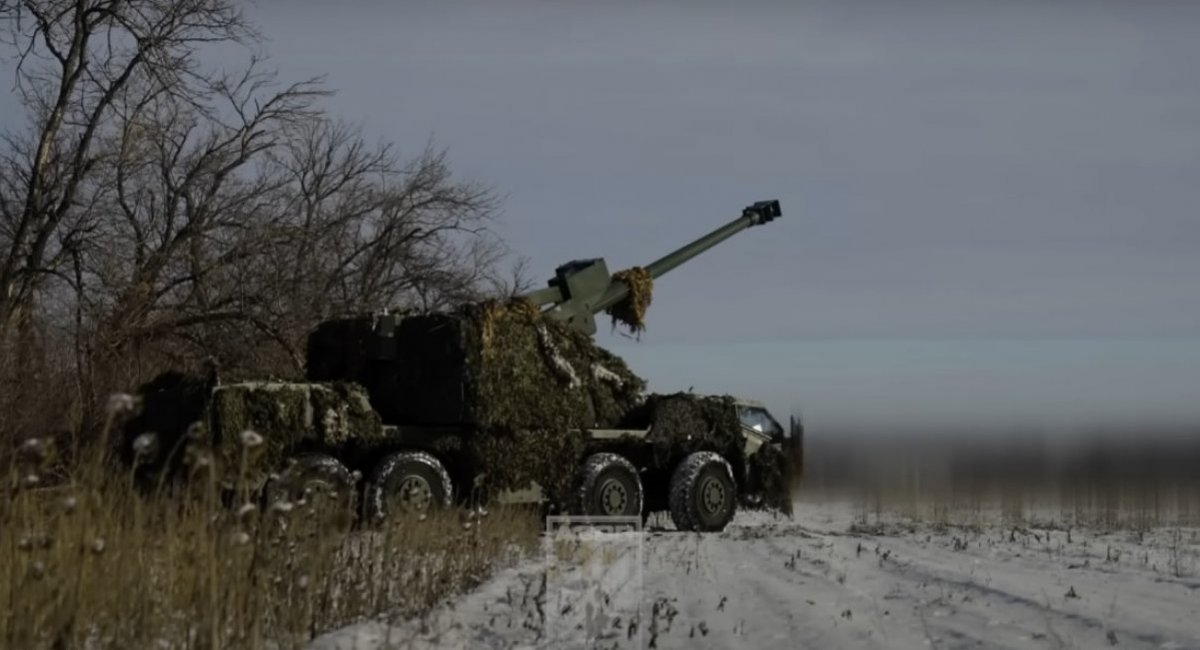
The DITA self-propelled gun manufactured by CSG subsidiary Excalibur Army and delivered to Ukraine, as seen in a video by the Azov Brigade.
Last October, the CSG plant became operational, making CSG the first major Western arms manufacturer to start production in Ukraine. In the first year, they are expected to deliver 100,000 rounds of 155mm artillery shells. Ukraine switched to this NATO-standard ammunition type from previous Soviet calibers during the war, after largely replacing its guns with new models supplied from the West. Incidentally, 4iG’s minority owner, Rheinmetall, also supplies the Ukrainian army with the same shells, and they are also building an ammunition factory in Ukraine.
CSG’s Ukrainian partner, Ukrainska Bronetechnika, became the largest private supplier to the Ukrainian army after the Russian attack in February 2022, with its annual turnover increasing to $350 million (116.2 billion forints), more than ten times the previous value.
A statement from CSG describes also its subsidiary, Excalibur Army, as “Ukraine’s largest and most reliable arms supplier.”
The company has been involved in arming the Ukrainian army since 2022, refurbishing Ukrainian T-72 tanks between 2022 and 2023 as part of an American-Dutch program, and later supplying missile and conventional artillery equipment. Last year, Excalibur also opened its office in Ukraine in order to launch production there.
Western arms manufacturers rushing to outsource production to Ukraine is not as surprising as it sounds.
Ukraine is now not only an end user of weapons, but has developed a significant production and technological capacity in the last few years despite escalating Russian bombings. As a result, the Ukrainian army is increasingly being supplied with domestically produced equipment.
For example, domestic drone production has developed exponentially: Ukraine produced less than 2,000 drones in 2022, but by 2025, drones were already being produced in the millions. Ukraine and Russia are now probably the world leaders in military drone technology. It is telling that after the attack on Iran, US air defense had trouble with the Shahed drones produced with Russian and Iranian technology, so the Pentagon began negotiations with Kiyv about purchasing Ukrainian-made interceptor drones.
Foreign investors calculate that this production capacity will remain after the war, and Ukraine could become one of Europe’s leading arms exporters.
Russian warship, Tatra chassis
Another CSG subsidiary, the Tatra Trucks vehicle factory has a special role in the recent 4iG-CSG deal. According to the agreement, 4iG SDT will be the exclusive distributor of Tatra vehicles in Hungary, meaning that the Hungarian Defense Forces will have to go through them to purchase Tatra vehicles through them. In addition, Rába’s Győr factory will also be involved in the production of Tatra vehicles.
Tatra is also a supplier to the Ukrainian army: the company began supplying the Ukrainians with Tatra 815-7 (Tatra Force) vehicles even before the war. These were equipped with Neptune anti-ship missiles, notable for sinking the flagship of the Russian Black Sea Fleet, Moskva.
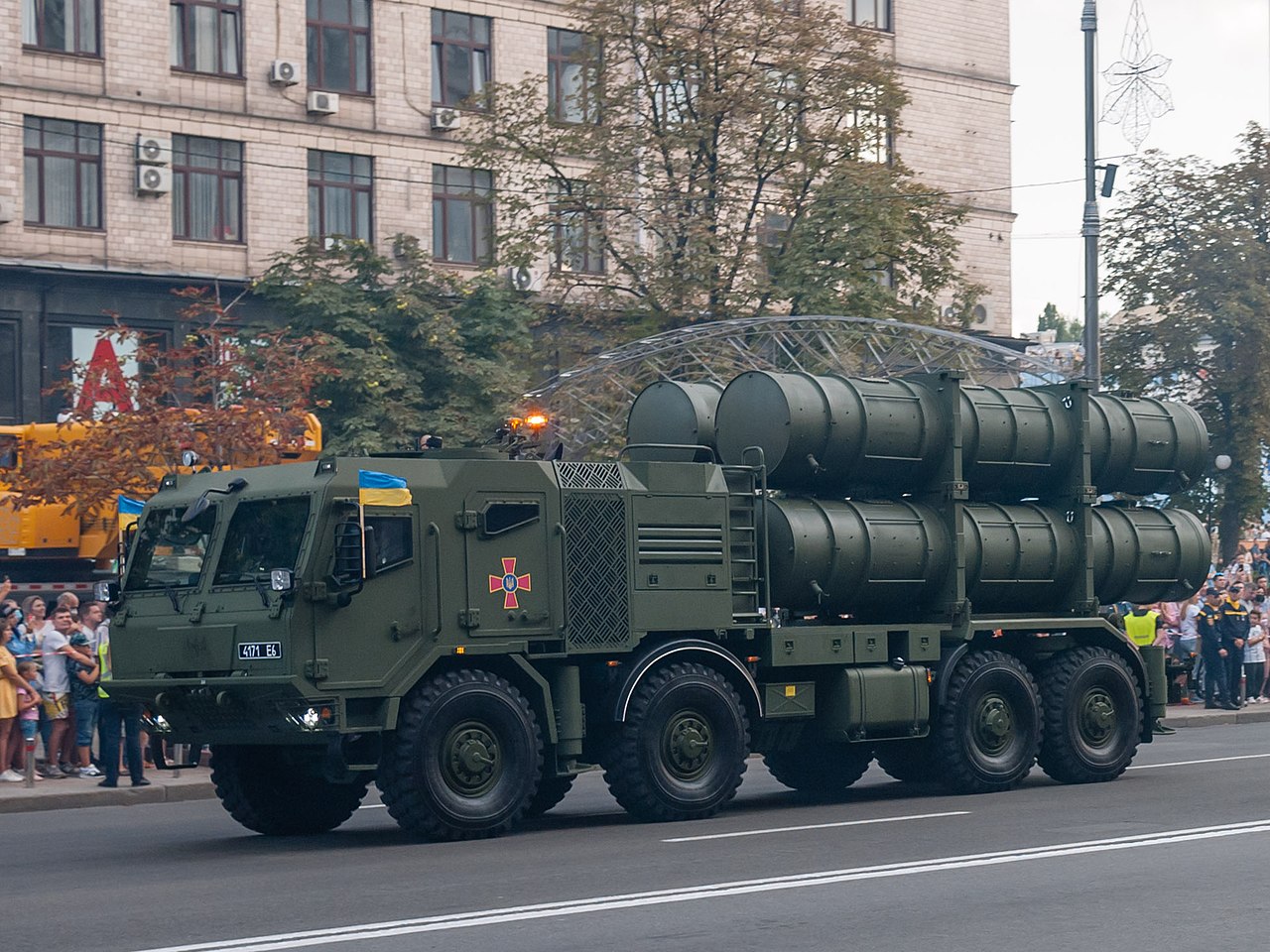
Tatra 815-7 with Neptune rocket launcher in Kiyv. Source: Wikimedia Commons
In 2022, Tatra representatives signed a new contract with the state-owned company VOP CZ for the supply of vehicles to the Ukrainian armed forces, and a year later, according to Ukrainian news reports, they were negotiating with the Ukrainian armed forces to deliver thousands of new trucks. This seems to have started. In 2024, the Ukrainian army first deployed new versions of the Bohdana self-propelled gun, which uses a Tatra Force chassis – the mounted gun is also a CSG product, the aforementioned Excalibur Army model.
According to the OSINT website defensearchives.com, the Bohdans were initially built using the chassis of older, redundant military vehicles. Later, the guns were mounted on newly imported Tatra trucks.
In its 2025 report, Tatra listed Ukraine among its most important export markets.
A 2024 report also mentions that the production of Ukrainian self-propelled guns is hampered by the fact that Tatra’s production capacity is already booked for the next two years – this could of course be helped if truck production actually starts in Győr.
Combat vehicle from Zalaegerszeg to Ukraine
Two additional companies appear in the 4iG military industry agreement: Turkish Nurol Makina, the manufacturer of Gidrán vehicles, and American aircraft and weapons manufacturer Lockhead Martin – these are also partners of the Ukrainian armed forces.
In 2023, Nurol Teknoloji, part of the Nurol Group, indicated in a statement that ballistic armor plates and personal protective equipment had been delivered to Ukraine. Lockheed Martin has been a supplier to the Ukrainian forces since the beginning of the war, producing, for example, elements of the Javelin and Himars missile systems, as well as missiles for the Patriot systems.
After Donald Trump took office, the aid program was replaced by the PURL initiative, wherein European NATO member states are purchasing American weapons for Ukraine, including Lockheed Martin missiles.
Last May, the US State Department also approved a deal for Lockheed to provide training and technical support to the Ukrainian Air Force for F-16 fighter jets.
The German Rheinmetall – which, through 4iG, is today the most influential foreign company in the Hungarian military industry – is also an important partner of the Ukrainian armed forces and arms industry.
In addition to the aforementioned ammunition factory, Rheinmetall has been operating a joint venture with the state-owned Ukroboronprom since 2023, and later concluded a strategic cooperation agreement with the Ukrainian Ministry of Strategic Businesses. In addition, since the beginning of the war, Rheinmetall has delivered numerous weapon systems. Among the systems delivered, the Lynx infantry fighting vehicles have the most relevance to the Hungarian weapons industry, as Rheinmetall and 4iG jointly own the Lynx factory opened in Zalaegerszeg.
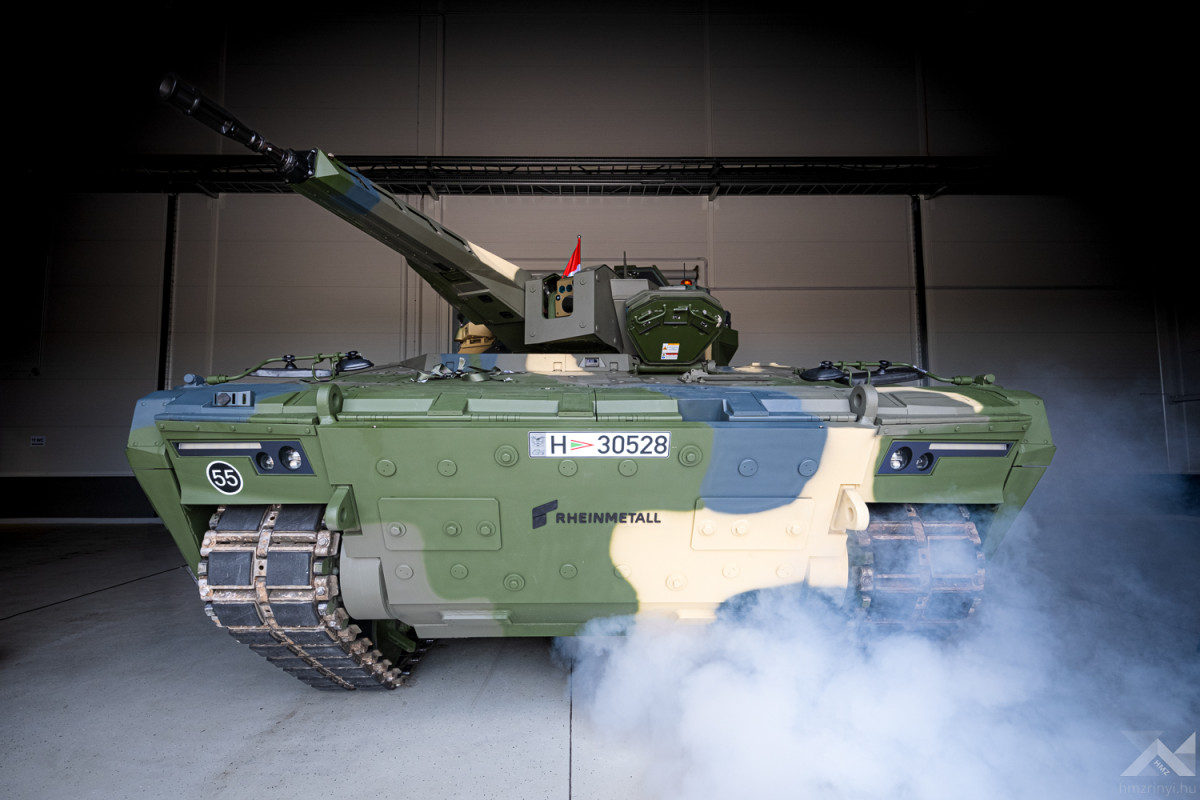
Lynx infantry fighting vehicle manufactured in Zalaegerszeg. Source: honvedelem.hu
Rheinmetall delivered the first batch of Lynx IFVs to Ukraine in January. It is unclear whether these vehicles were manufactured in Hungary or Germany, however, if we can believe The Hungarian Conservative, a pro-Orbán magazine that receives funding from the government, Ukraine’s very first Lynx was built in the Hungarian factory.
“The Hungarian connection: from Zalaegerszeg to Ukraine. The first Lynx manufactured in Hungary was sent to Ukraine for testing at the end of 2024. Based on the experience gained there, the Ukrainian armed forces chose this model as the basis for their future platform. After the tests, the project was quiet for a while, but now it is official: Ukraine is launching its own Lynx production”
– the government-affiliated newspaper proudly reported at the time. It is perhaps not a coincidence that The Hungarian Conservative is only published in English, aimed only at a foreign audience.
Coupled with the prime minister’s ongoing anti-Ukrainian campaign, these deals paint a bizarre perspective. As part of a “geopolitical strategy,” the government is outsourcing a large part of Hungarian military production to companies that are closely tied to the Ukrainian military industry. One of these companies has directly supplied at least one Hungarian-made combat vehicle to the Ukrainian armed forces, which a pro-government newspaper enthusiastically reported on at the time.
Meanwhile, Viktor Orbán is presenting Ukraine as an enemy of Hungary and envisions an Ukrainian armed attack on Hungarian power plants, which has also led to the mobilization of the army.
Writen and translated by Zalán Zubor. he original Hungarian articles can be found here. Cover image: montage by Átlátszó
Share:
Your support matters. Your donation helps us to uncover the truth.
- PayPal
- Bank transfer
- Patreon
- Benevity
Support our work with a PayPal donation to the Átlátszónet Foundation! Thank you.
Support our work by bank transfer to the account of the Átlátszónet Foundation. Please add in the comments: “Donation”
Beneficiary: Átlátszónet Alapítvány, bank name and address: Raiffeisen Bank, H-1054 Budapest, Akadémia utca 6.
EUR: IBAN HU36 1201 1265 0142 5189 0040 0002
USD: IBAN HU36 1201 1265 0142 5189 0050 0009
HUF: IBAN HU78 1201 1265 0142 5189 0030 0005
SWIFT: UBRTHUHB
Be a follower on Patreon
Support us on Benevity!
