

“The files came from the Carmelite” – former journalist speaks out about Orbán’s propaganda machine
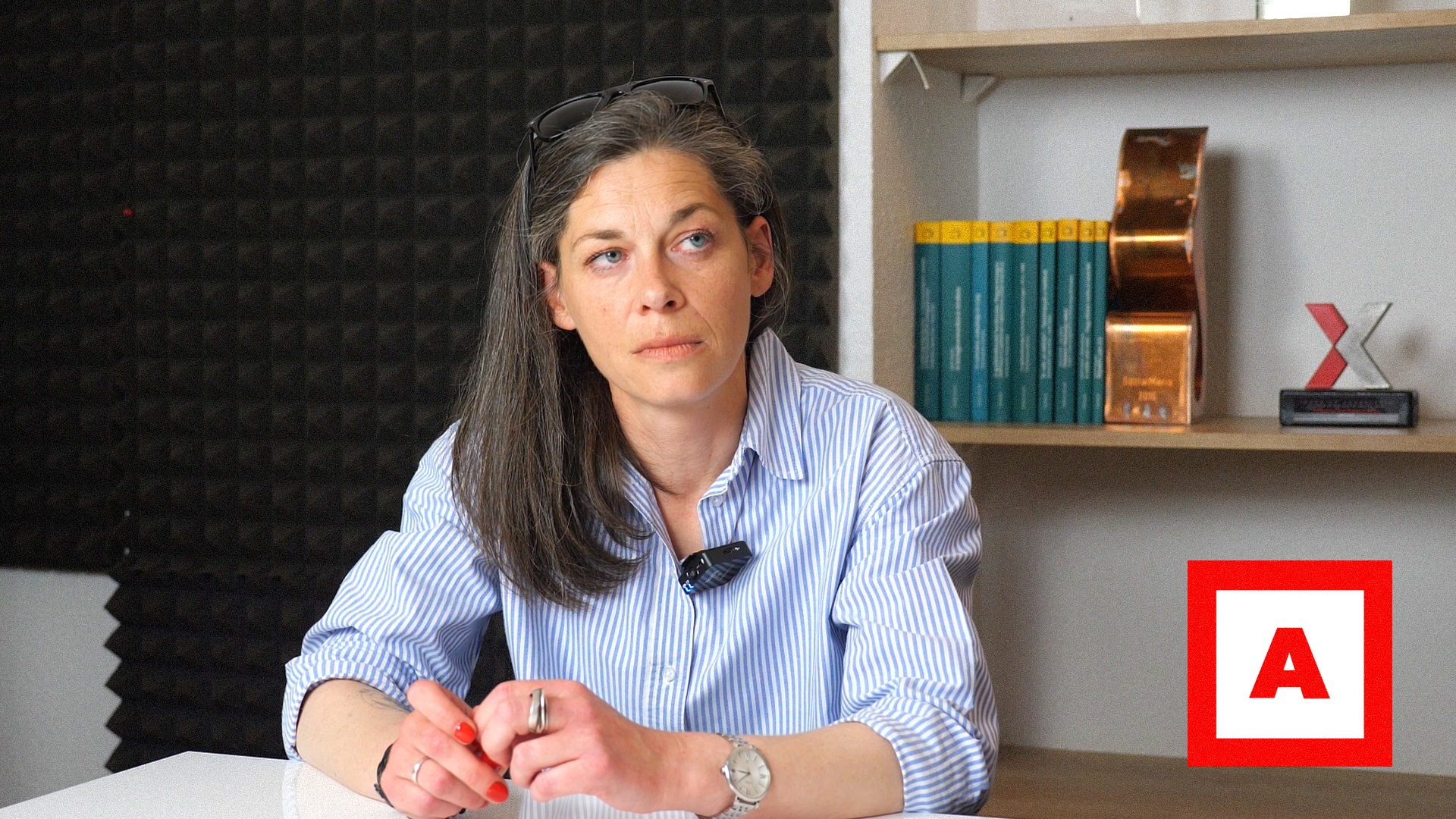
A former journalist at the pro-Orbán tabloid Ripost, Ágnes Forgács, described her experiences of the paper’s political smear campaigns and intelligence-backed surveillance during Viktor Orbán’s long tenure as Prime Minister. In response to our interview Gergely Karácsony, the Mayor of Budapest revealed details of extensive government-linked harassment against him and his associates, which included vehicle tailing, physical surveillance, wiretapping, and the use of law enforcement agencies to lend credibility to the smears.
Ágnes Forgács began her career as a political journalist in 2001 at the left-wing daily newspaper Népszava, then moved into tabloid media – specifically, outlets run by editor-in-chief Miklós Ómolnár, who later played a central role in launching Ripost and shaping sensational and biased political tabloid journalism in Hungary.
She describes her work with celebrity gossip magazines ‘Story’ and ‘Best’ as “friendly tabloid” work: following celebrities, taking paparazzi photos, and digging into private lives – but without the aim of destroying people. That methodology was later transferred to politics: long-term secret surveillance, photography, hunting for compromising situations, mocking labels, and weaponising the tabloid press in support for the ruling Fidesz party.
From tabloid to political hit jobs
Ómolnár was dismissed from Story and Best in 2014, and in the same year, he approached Forgács about a new paper and reassembling the old team. The result was the government-funded magazine Ripost. Ómolnár told Forgács to stop writing about celebrities and focus on political figures and crime stories.
It soon became clear these were not standard journalistic topics but targeted cases, pre-selected individuals, and politically useful narratives.
One early story Forgács later recognised as character assassination involved Marcell Murányi, then editor-in-chief of Népszabadság. She obtained police information about a fatal traffic accident in which Murányi was involved and passed it to Ómolnár, who published an article. The information itself was publicly obtainable, but Forgács now considers it a serious ethical breach that Murányi was not contacted beforehand. This practice became routine: subjects were often not approached at all, or only with token questions right before or even after publication.
The fundamental difference from real journalism, she says, was that the goal was never to uncover truth, verify facts, or obtain responses from those involved. It was to quickly produce a politically useful narrative. People were treated as if they “wouldn’t tell the truth anyway,” so the key journalistic safeguard of hearing the other side was simply abandoned.
Government-ordered campaigns: Scientology, Jobbik, and beyond
Around 2015, Ripost ran a series against the Church of Scientology – another “ordered from above” project. Ómolnár gave Forgács names of former church members who had allegedly committed suicide. She worked on it for a long time and only later understood the government’s interest: it did not want the church to establish its Central European headquarters in Hungary. This was when the internal phrase “they’re asking for it from above” has become a common occurrence in the newsroom.
Staff often did not know exactly who issued the orders, but they understood these were not independent editorial decisions.
Forgács resigned in 2016 and worked in a factory for a while but was later lured back for the print launch of Ripost. She says the situation worsened after that. Around 2017 came what she calls “open-field attacks.”
In 2017–2018, ahead of the parliamentary election, the opposition party Jobbik was a main target. Forgács and colleagues were sent to a lakeside hotel and take photos of the Jobbik parliamentary group meeting. The resulting article implied that they infiltrated the meeting and overheard insider information, but in reality, they photographed from a distance with a 200mm lens and heard nothing, yet articles implied inside knowledge.
On 15 March 2018 (Hungary’s national holiday), Forgács was sent with photographers to find or even provoke a Jobbik scandal. No usable material emerged, and she was dismissed for not aligning with the expected political logic.
Expressing remorse, Forgács said that although she rejected the term, her critics were right when calling her a “propagandist”. Now she believes that she was a journalist until 2015, and a propagandist afterwards. She blames herself for not recognising the system she was working in.
V4NA “International News Agency”
in late 2018, not long after leaving Ripost again, Forgács was offered a job at a V4NA, a news “international news agency” allegedly based in London. She was sent with a small team to Brussels and Strasbourg with European Parliament access, but their job was not to report on plenary sessions or EU decisions. It was to “find something bad.”
One of their targets was European Commission President Jean-Claude Juncker – who had publicly called Viktor Orbán a dictator. Forgács and her photographer waited for days outside his house but only managed to speak to Juncker’s wife.
Forgács says the political goal at V4NA was overt: smear operations.
No one asked for traditional journalism. The “international” aspect was largely fictional – the London headquarters existed only on paper; real work happened in Budapest.
Mediaworks era and government files
Forgács returned to Ripost for a third time in 2019, which was now under the government-aligned KESMA/Mediaworks conglomerate. During the 2019 local election campaign and afterwards, the opposition-aligned Budapest Mayor Gergely Karácsony became a frequent target. They followed and photographed him for a long time but could only prove the banal contradiction that the green politician who advocated cycling used a car. Minor issues were inflated into attacks through headlines and framing.
The goal was not a major scandal but continuous wear-down of the target.
Responding to the interview, Karácsony framed the issue as part of a broader pattern affecting many Hungarians who opposed the system over the past 16 years. The mayor recalled the extensive government-linked harassment against him and his associates, which included vehicle tailing, physical surveillance, wiretapping, and the use of law enforcement agencies to lend credibility to the smears.
Karácsony told Átlátszó that Forgács’s revelations represent only “the tip of the iceberg.” He described years of coordinated attacks through pro-government media outlets – from Megafon and state TV M1 to Ripost and Metropol (a paper distributed for free on Budapest subway stations) – involving fabricated scandals, disinformation, and the use of law enforcement to lend credibility to the smears.
“There was everything: car following, surveillance, wiretapping, harassment,” Karácsony said, adding that authorities conducted raids on City Hall and even a deputy’s private home based on false allegations, such as claims that the City Hall building had been sold secretly.
Forgács also described an incident where she and her photographer were sent to New York to track down Dávid Korányi, a former advisor to Karácsony. Mr. Korányi has confirmed to Átlátszó that he was followed in New York. He later won legal cases against the outlets smearing him.
In 2021, ahead of the 2022 election, the propaganda work intensified. One early task was to secretly photograph Mr. Mártha (later head of Budapest Transport) at an equestrian polo event – from bushes – while other government-linked figures attended openly. Mr. Mártha later expressed his shock to Átlátszó at the use of methods reminiscent of communist-era secret police tactics against him, despite him never holding political office. He has also won multiple libel cases against pro-government media.
Files and recordings “from above”
Forgács repeatedly mentions receiving “files from the Carmelite” – a reference to the former Carmelite Monastery in Budapest that housed parts of the Prime Minister’s Office.
These included surveillance-style dossiers and secret recordings used for smear stories.
She says the machinery combined classic tabloid methods (stalking, hidden photography, hunting intimate moments) with political objectives. The aim was relentless negative coverage of government opponents to shape public perception.
For example, Ómolnár summoned her and his photographer colleague one evening in 2021 and played them a video recording of Péter Jakab, Jobbik MP and his chief of staff. The hidden-camera footage clearly showed that there might be an intimate relationship between the two of them. Ómolnár told them that the recording had been made by “Jobbik defectors” who didn’t want to get caught. However, based on the technical details, Forgács and his photographer colleague had their doubts about this.
They believed the recording looked far more professional than anything amateur party members could have produced. They suspected the secret service—or some kind of secret service involvement.
The task then became to somehow “replicate” what they had seen: to use their own photos and their own on-site presence to make what they had received ready-made from somewhere else usable in the press. This is one of the most serious claims in the interview:
According to Forgács, one function of the propaganda media has been to “legitimize” intelligence-style information of unknown origin as press material.
Forgács decided to speak out because the public needs to know how this system worked and who bears responsibility for the degradation of large parts of Hungary’s right-wing press. She does not claim to know every detail of the funding or command chain, but she is certain that tabloid techniques were systematically placed at the service of Fidesz political interests.
Apart from Miklós Ómolnár, Forgács also pointed to former state secretary Örs Farkas, who allegedly provided intelligence material for Ripost. When questioned by Átlátszó, Mr. Farkas denied that he was in contact with intelligence services when the aforementioned Ripost articles were published, and said that after 2022, when he became Deputy State Secretary overseeing national intelligence services, he was “no longer in a working relationship with members of the press.”
Átlátszó attempted to contact Miklós Ómolnár, however, he has no email address publicly available. The Mediaworks publishing group, which owns Ripost, was also asked for comment but did not respond to the questions.
Written by Tamás Bodoky, translated by EUalive. The original Hungarian articles can be found here and here. Cover photo by Bence Bodoky.
Share:
Your support matters. Your donation helps us to uncover the truth.
- PayPal
- Bank transfer
- Patreon
- Benevity
Support our work with a PayPal donation to the Átlátszónet Foundation! Thank you.
Support our work by bank transfer to the account of the Átlátszónet Foundation. Please add in the comments: “Donation”
Beneficiary: Átlátszónet Alapítvány, bank name and address: Raiffeisen Bank, H-1054 Budapest, Akadémia utca 6.
EUR: IBAN HU36 1201 1265 0142 5189 0040 0002
USD: IBAN HU36 1201 1265 0142 5189 0050 0009
HUF: IBAN HU78 1201 1265 0142 5189 0030 0005
SWIFT: UBRTHUHB
Be a follower on Patreon
Support us on Benevity!
