

Poisoned groundwater was detected near top oligarch’s waste processor
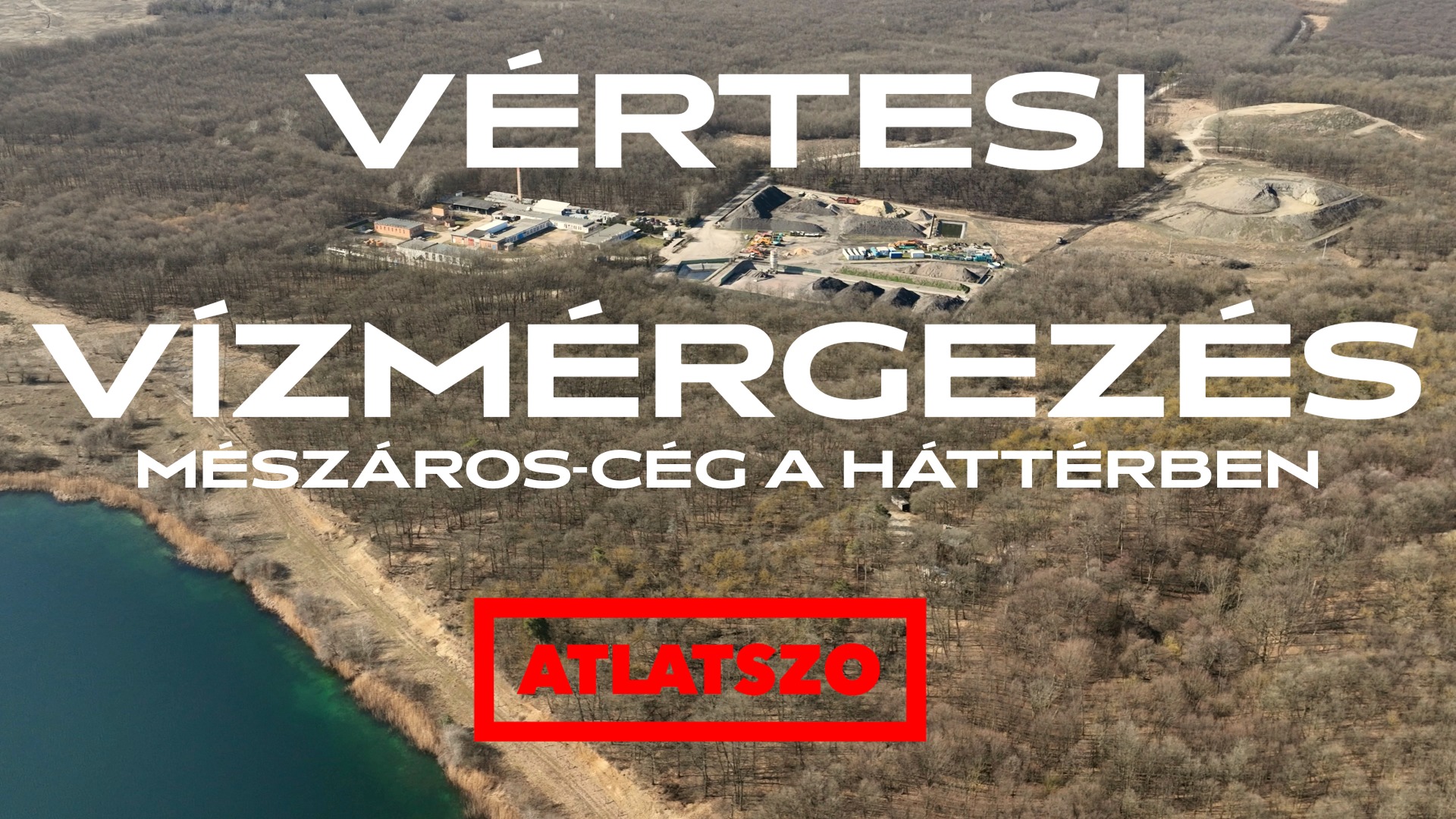
The waste processor of the Vértes Environmental Management Ltd. (VKG), which is affiliated with Lőrinc Mészáros, processes hundreds of thousands of tons of hazardous and non-hazardous waste in the Vértes mountain range in Western Hungary. According to local civil society groups, the company’s site pollutes a nature reserve and endangers the drinking water of nearby settlements.
The Vértes waste management firm VKG, affiliated with Hungar’s richest man and Viktor Orbán’s childhood friend Lőrinc Mészáros, has long been a subject of criticism by local civil society organizations and environmentalists. In 2025, the company (with the permit of environmental authorities) filled up the former mining lake in Pusztavám, also known as the Cica-homok nature reserve. This was officially reported as recultivation, but many locals see it as an environmental disaster: as Átlátszó reported, company used hazardous and non-hazardous waste for filling the lake.

According to locals, the VGK plan at nearby Oroszlány, which is carrying out the filling, also endangers the environment. Their concerns have been proven by measurable data, as shown in Átlátszó’s video.
There is no fence around the waste processing plant, and for hikers walking through the forest, only plastic tapes currently mark the boundary of the hazardous site. The tapes were put up after activists monitoring the activities of VKG recently measured the chemical makeup of wastewater flowing out of the plant with measuring instruments – and the waste company probably didn’t like this.
The company collects and processes hundreds of thousands of tons of waste annually at its Oroszlány site using various technologies. From some of the processed hazardous and non-hazardous waste, it produces “artificial soil” (cover material), which is used, for example, to fill mining areas.
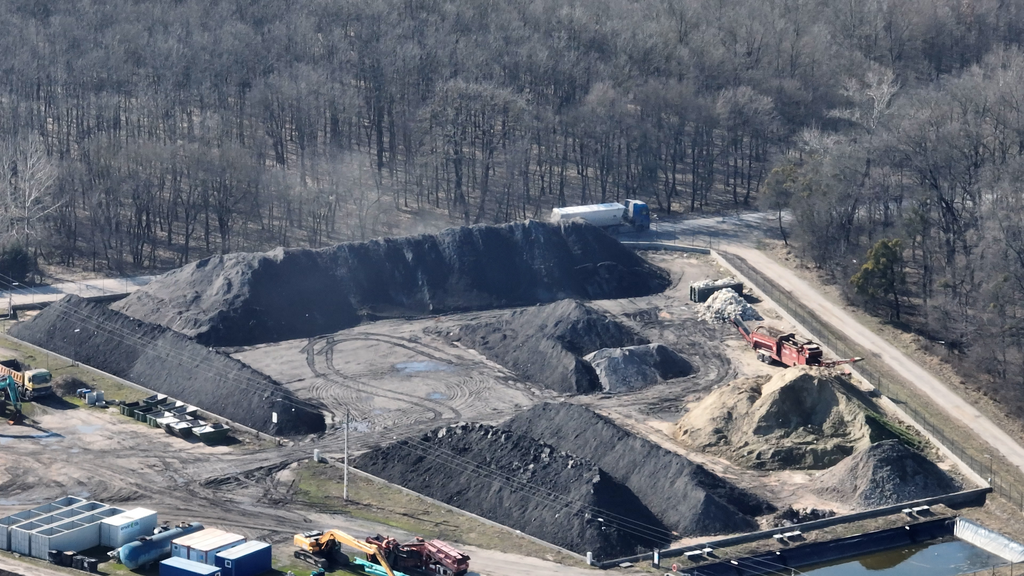
The Oroszlány site of VKG. (photo by reader)
However, members of a civil society group formed by residents of nearby settlements believe that this waste processing plant has no place in the Vértes hills, in the immediate vicinity of nature reserves. The residents are not only protesting against the company’s activities, but have also been documenting the process of deliveries to the site for several months.
They also tested the water flowing from the site and published their measurement results on Facebook.
“In the Vértes forest, industrial saline solution with a conductivity of 62 thousand µS/cm is leaking from the wasteland into the soil (this is 200 times the normal value!)”
– states one of their posts.
Nikolett Árvay, an MP-candidate from the opposition Tisza Party also carried out tests on site. According to a video posted on his social media page, accredited laboratory tests of the waters of the Natura 2000 area directly adjacent to the VKG site show that
above-the-limit quantities of hazardous and carcinogenic substances (lead, benzene, naphthalene) are present in water samples.
Tímea Kárpáti, a conservation engineer who has organized several demonstrations against the filling of the Cica-homok mining pond, and has also filed a police and prosecutor’s report told Átlátszó:
“Instead of the authorities – whose task should be to protect the natural treasures of Vértes and the healthy environment of the residents – civilians are now carrying out the inspection work. An ecological disaster occurred at the VKG site in 2017, which polluted the nearby Pénzes stream. Despite this, the government office has re-authorized the industrial activity here, which is largely not taking place in the appropriate closed system, but in the open air, which could cause unforeseeable and irreversible damage to this area.”
Among the residents who spoke to Átlátszó, Helga Halmi, a hobbyist nature photographer, said that she was shocked by the destruction she experienced as a result of the waste management plant’s activities.
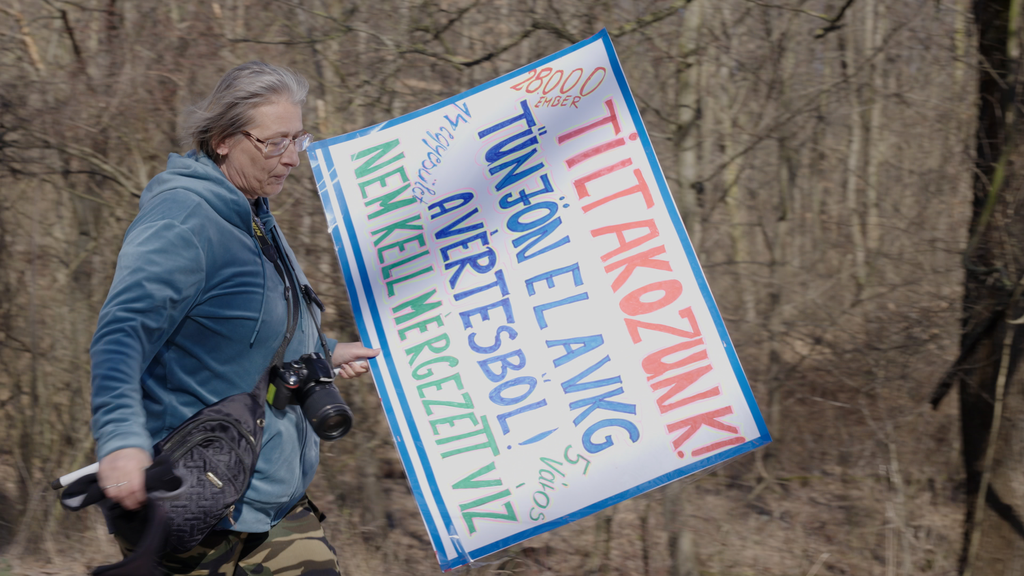
Helga Halmi, a resident of Bokod, with a protest sign (Photo: Gergely Pápai/Átlátszó)
Helga said that she regularly photographs the natural treasures and mining lakes of Vértes; one of her photos can still be seen on the information board placed by the Duna-Ipoly National Park Directorate marking the Cica-homok nature reserve. However, the lake itself and the 26 protected plant and animal species living there have already disappeared.
Other local residents told our newspaper that due to the karst bedrock, the contamination could reach the drinking water base, endangering the drinking water supply of 62 settlements. According to the civilians, the waste management activity that is taking place at the VKG site and in the Vértes Natura 2000 areas is unacceptable in the immediate vicinity of hydrogeologically sensitive, protected natural areas and lakes.
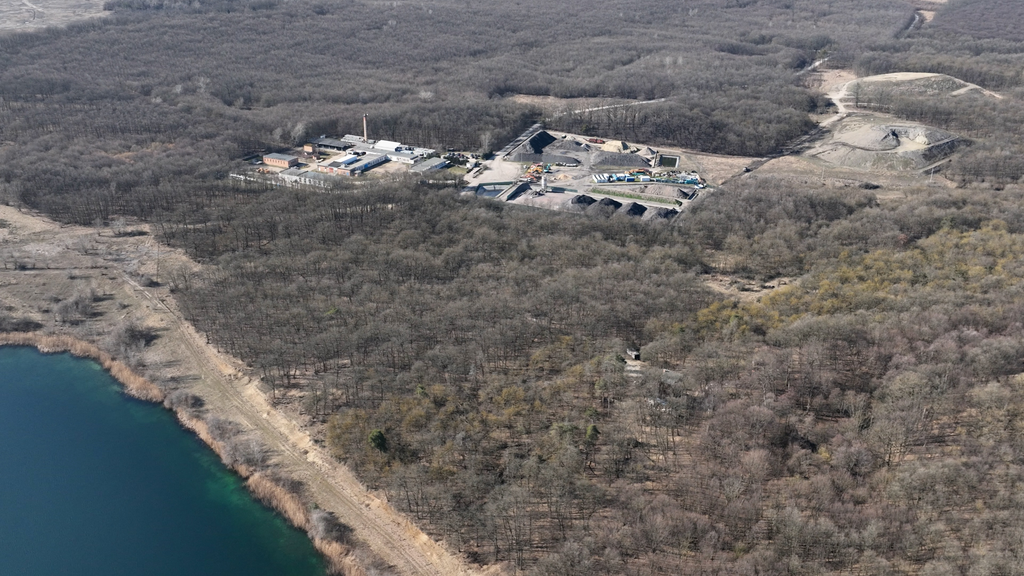
The VKG site in Oroszlány (photo by reader)
We would have liked to include the position of VKG in our video report, however they did not agree to an interview. We sent them questions in writing, to which we did not receive answers by the time our article was published.
Writen by Zsuzsa Bodnár, translated by Zalán Zubor. he original Hungarian articles can be found here. Photos and video: Gergely Pápai. Cover image by Átlátszó
Share:
Your support matters. Your donation helps us to uncover the truth.
- PayPal
- Bank transfer
- Patreon
- Benevity
Support our work with a PayPal donation to the Átlátszónet Foundation! Thank you.
Support our work by bank transfer to the account of the Átlátszónet Foundation. Please add in the comments: “Donation”
Beneficiary: Átlátszónet Alapítvány, bank name and address: Raiffeisen Bank, H-1054 Budapest, Akadémia utca 6.
EUR: IBAN HU36 1201 1265 0142 5189 0040 0002
USD: IBAN HU36 1201 1265 0142 5189 0050 0009
HUF: IBAN HU78 1201 1265 0142 5189 0030 0005
SWIFT: UBRTHUHB
Be a follower on Patreon
Support us on Benevity!
