

Billions spent on military theme park, enriching government contractor, damaging historic aircraft

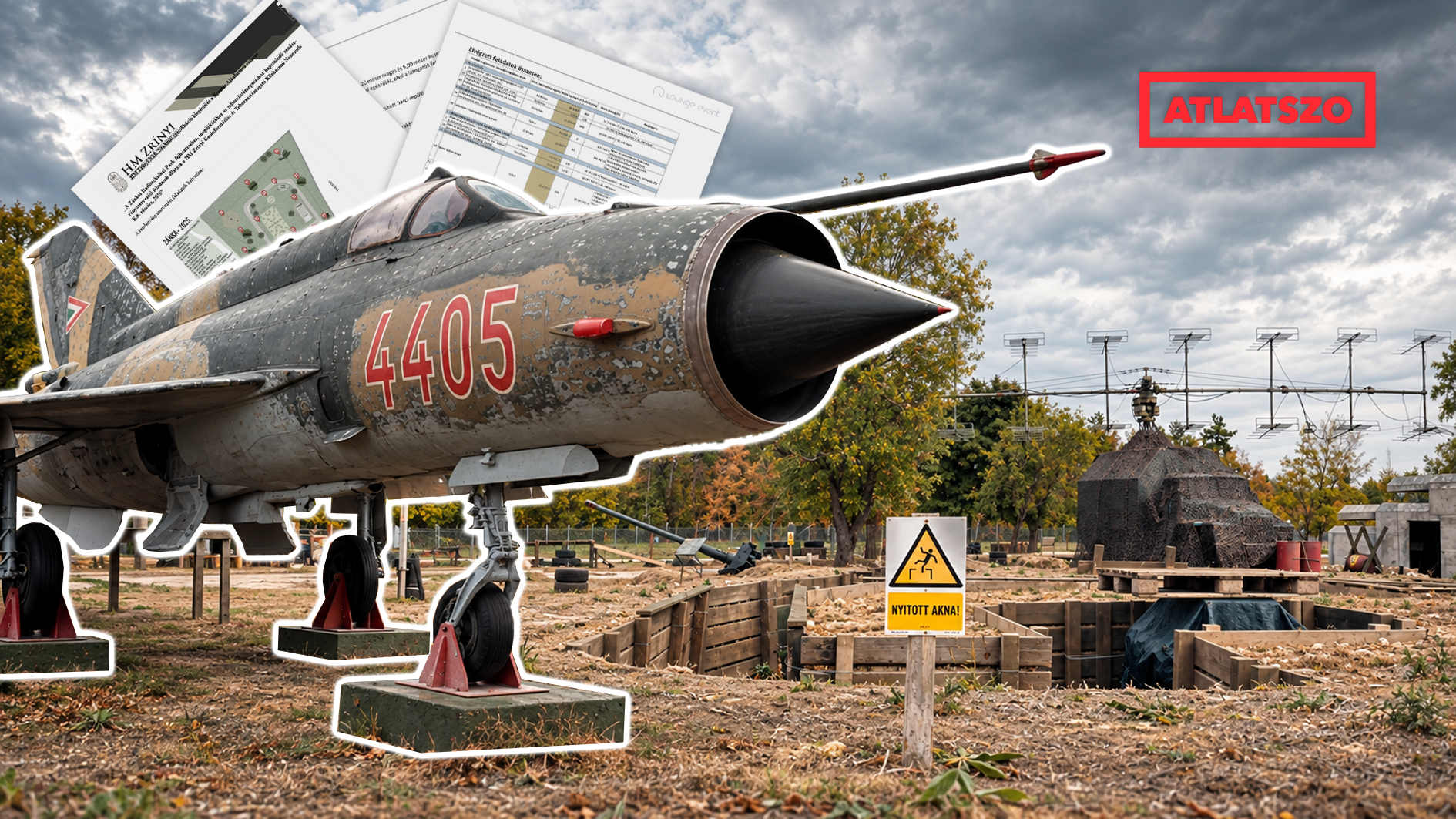
The Hungarian Ministry of Defence spent approximately HUF 4.5 billion (EUR 12.3 million) on a network of military-themed adventure parks operated by a company belonging to businessman Gyula Balásy, one of the largest beneficiaries of government communication contracts under the previous Orbán administration. Most of the parks closed after only a few months, while documents obtained by Átlátszó reveal questionable expenses, unusually high equipment rental fees and attractions that could not be found. At one location, poorly executed restoration work may also have caused serious damage to historic military aircraft belonging to the Hungarian Military History Museum.
The seven military experience centres were intended to promote military careers among children and young people through obstacle courses, simulators, laser tag arenas and military vehicle replicas. Their construction and operation were entrusted to Lounge Event, part of the business group controlled by Gyula Balásy, who had effectively dominated Hungarian government communication contracts for years.

The contracts were awarded through framework agreements administered by the National Communications Office (NKOH), rather than through separate competitive tenders for the individual parks. The projects were commissioned by HM Zrínyi, a state-owned company operating under the Ministry of Defence.
Following the change of government in May 2026, newly appointed Defence Minister Romulusz Ruszin-Szendi announced that
a criminal complaint had been filed over suspected mismanagement of public funds or fraud in connection with the contracts.
Átlátszó obtained hundreds of pages of contracts, invoices, price lists and technical specifications through freedom of information requests. Our investigation uncovered numerous questionable expenditures.
Millions spent on renting equipment
One of the most striking findings concerns the cost of renting equipment for the military parks. According to the documents, Lounge Event’s price quotations included HUF 344 million (EUR 938,000) for renting power supply equipment and HUF 261 million (EUR 711,000) for LED walls at five regional centres. The contracts also contained substantial charges for ordinary furniture and technical devices.
At Budapest’s Bálna Defence Centre, located in the iconic “Whale” event center at the Danube bank,
the quoted rental cost of filing cabinets amounted to HUF 13.5 million (EUR 36,800), while counters cost another HUF 17 million (EUR 46,300).
Renting VR equipment and interactive LCD screens accounted for tens of millions of forints.
Another particularly expensive attraction was a miniature battlefield for remote-controlled toy tanks, installed in the basement of the Bálna building. According to the contractor’s report, the installation cost HUF 31 million (EUR 84,500), although it consisted of small-scale models and scenery through which visitors could navigate toy tanks. Other contracts included unusually high hourly rates for creative professionals and substantial fees for preparing technical plans.
The attraction was completed in April 2026, but the centre closed in June, meaning that the expensive installation operated for just one or two months.
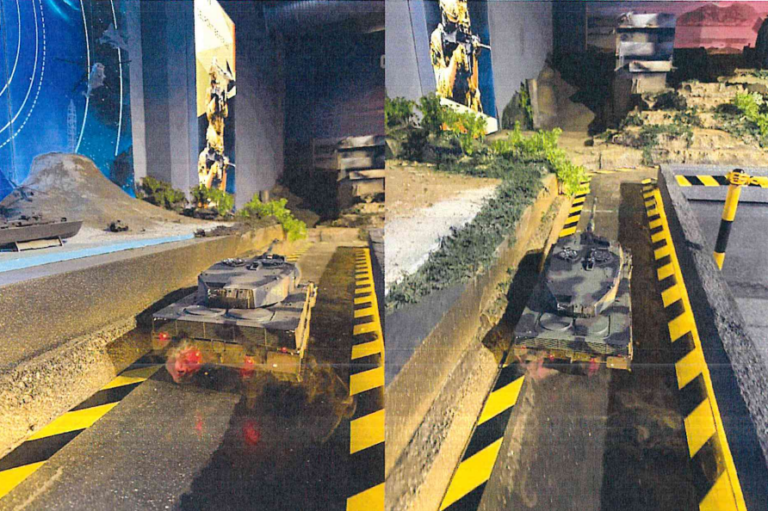
RC-tank at the diorama that supposedly cost thousands of Euros to build. Photo obtained by freedom of information request from HM Zrínyi Kft.
Lounge Event rejected suggestions of irregularities, arguing that the prices were determined by the applicable government framework agreements and approved by the contracting authority. The company also explained that the framework agreement covered event management services rather than equipment purchases, meaning that renting equipment was required under the contractual arrangements.
Nevertheless, the documents raise serious questions about whether the projects represented value for money.
A nearly half-billion-forint adventure park falling apart
Our follow-up investigation focused on the military technology park in Zánka, near Lake Balaton, where Lounge Event received nearly HUF 500 million (EUR 1.36 million) to develop and operate a military-themed adventure centre. The site had originally opened in 2010 as an outdoor exhibition of decommissioned military vehicles, including two helicopters and a MiG-21 fighter jet belonging to the Hungarian Military History Museum.
In 2025, the park was incorporated into the new military adventure park network. Obstacle courses, simulated bunkers, watchtowers and military vehicle replicas were installed around the existing exhibits.
However, when Átlátszó visited the site in October 2026, the newly built attractions were already visibly deteriorating.
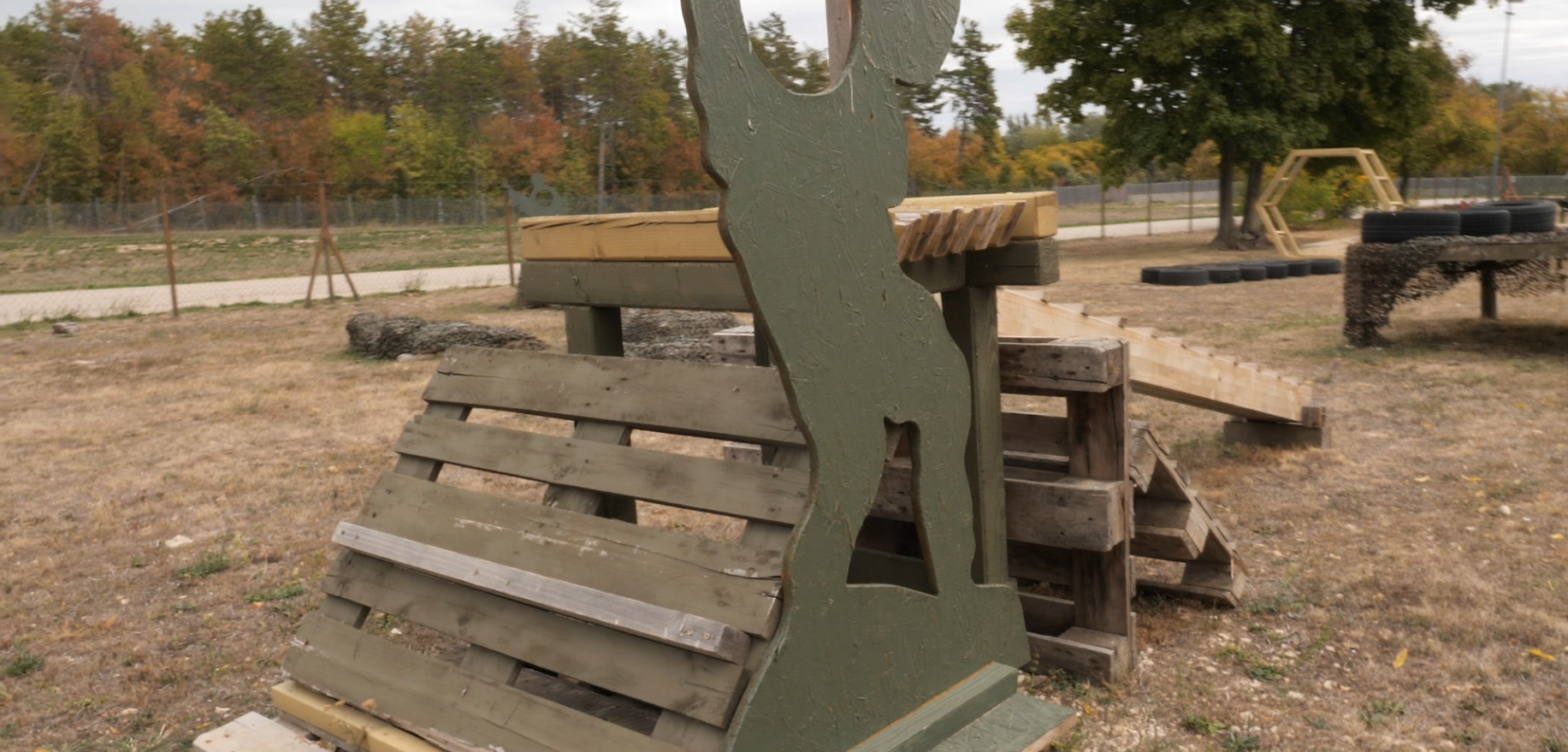
A detail of the obstacle course at the Zánka Military Technology Park – photo: Átlátszó / Bence Bodoky
Many structures had been assembled from wooden pallets, inexpensive oriented strand boards (OSB) and polystyrene. Some were warped, collapsing or potentially dangerous. One elevated bunker lacked protective railings, while its wooden floor appeared unstable.
Replicas of modern Lynx and Gidrán military vehicles had also been constructed from materials apparently unsuitable for prolonged outdoor exposure. The tracks of a Lynx replica, for example, consisted of painted polystyrene pieces held together with wire.
We were also unable to find several attractions listed in the contractor’s reports,
including a tactical escape room priced at HUF 16 million (EUR 43,600) before VAT and a dedicated drone landing area. A former employee told us that only six of the ten interactive attractions described in the project documentation had been consistently operational.
Historic military aircraft may have suffered serious damage
Perhaps the most troubling findings concern the restoration of historic military vehicles displayed at Zánka. The contract included more than HUF 21 million (EUR 57,200), excluding VAT, for refurbishing military equipment belonging to the Military History Museum. However, aviation preservation specialist Ákos Balogh, who accompanied Átlátszó during its site visit, said that the work carried out on the historic aircraft may have caused more harm than good.
According to Balogh, the two helicopters had been repainted using inappropriate techniques and apparently unsuitable materials. The paintwork failed to reproduce the aircraft’s historically accurate military camouflage and lacked the protective treatment required for aluminium aircraft structures.
The condition of the MiG-21 fighter jet was particularly concerning.
After the initial repainting was criticised, workers began removing the new paint, but the restoration was never completed.
Consequently, parts of the aircraft were left exposed to the weather without adequate protection. Visible corrosion had already developed on several components. Balogh warned that the inappropriate paintwork could accelerate deterioration and compromise both the historical authenticity and preservation of the museum exhibits.
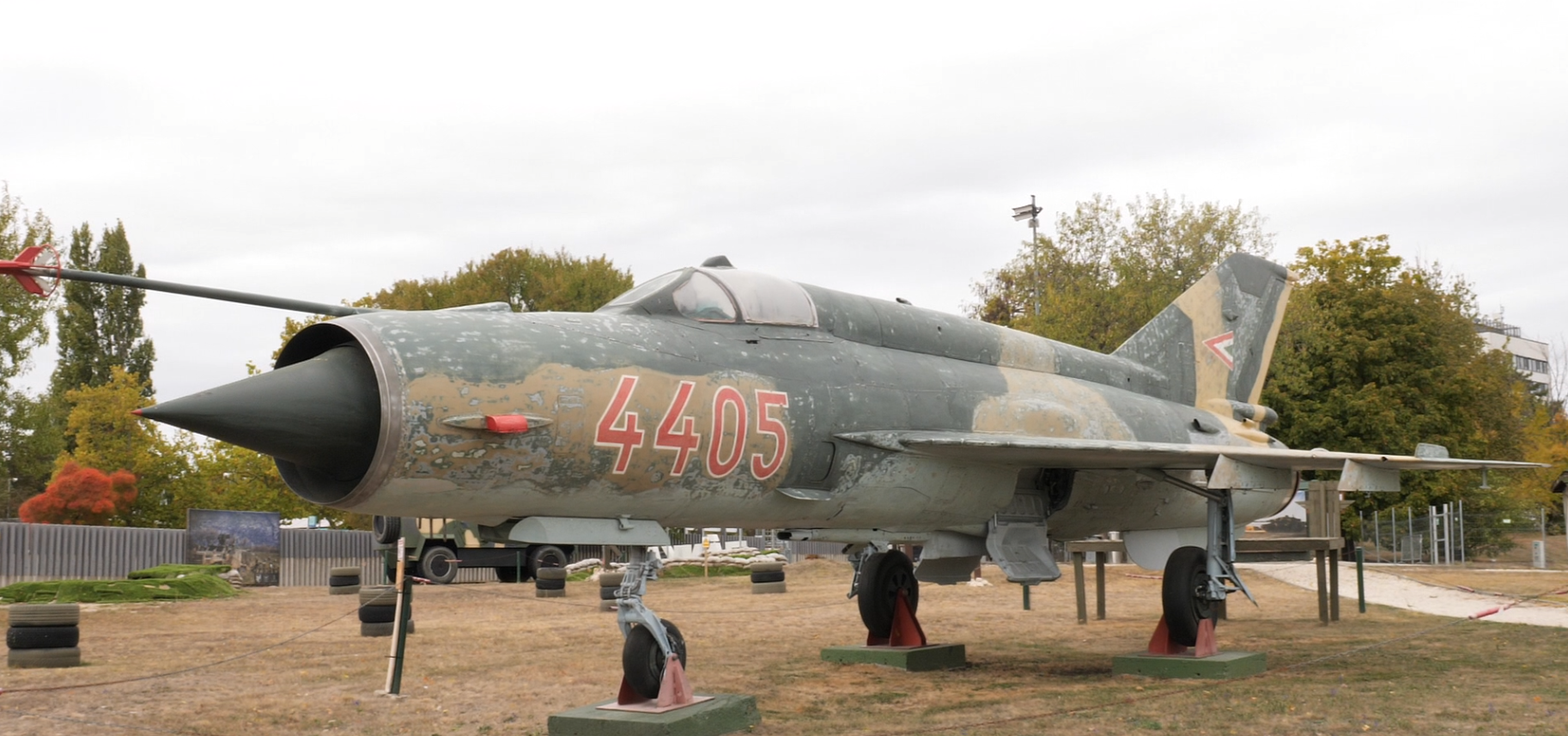
Photo: Átlátszó / Bence Bodoky
The subcontractor Brandhub, which participated in the project, acknowledged that the national Military History Museum had raised objections to the painting of the three aircraft. The company said corrective work had begun under professional supervision but was interrupted before completion.
Brandhub maintained that the vehicles had already been in poor condition before the project and expressed its intention to complete the necessary repairs. It also stated that the museum had not objected to the painting of five ground vehicles.
The company further claimed that Lounge Event had not fully paid for services it had already delivered and that it had terminated its contract in June 2026 after financing operations from its own resources for several months.
Expensive projects with remarkably short lifespans
Despite billions of forints in public spending, most of the military adventure parks operated for only a short period.
The Székesfehérvár centre, for example, opened in March 2026 and closed approximately three months later.
Other facilities were similarly shut down after the government change, when their operating contracts expired or were terminated.
Former employees told Átlátszó that the parks attracted few visitors. Some also questioned the concept itself, noting that attractions such as laser tag, toy tanks and obstacle courses primarily appealed to children under 14 rather than the young adults targeted by military recruitment campaigns.
The Ministry of Defence stated that the parks could not continue operating under their previous financial and legal arrangements. However, it did not rule out reopening some facilities following a review.
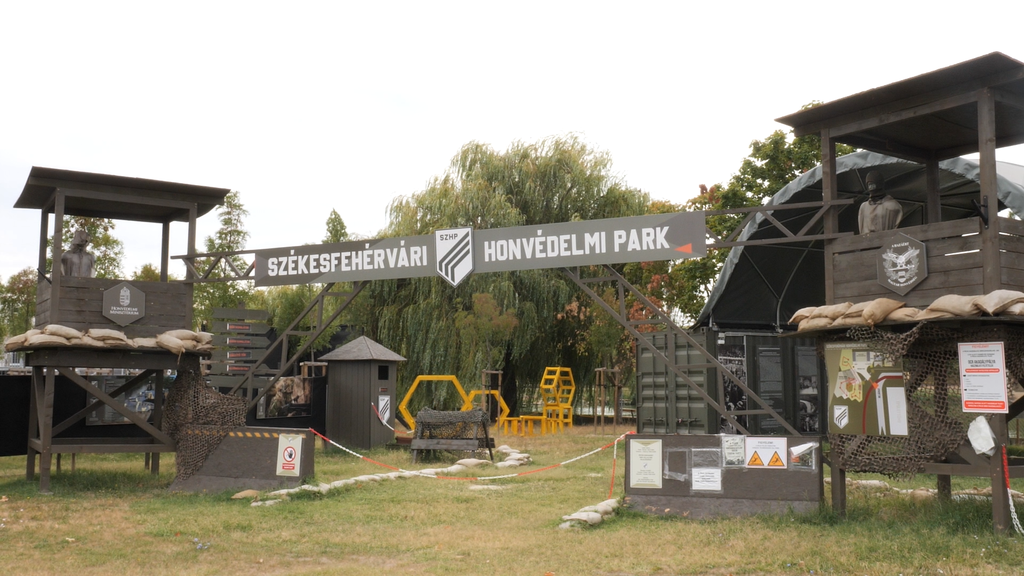
An exterior view of the now-closed National Defense Park in Székesfehérvár. Photo by Bence Bodoky
The two investigations highlight not only potentially excessive public spending but also a broader failure of planning and oversight. Billions were channelled into short-lived attractions, expensive rentals and poorly constructed facilities, while valuable historical military equipment may have suffered additional damage.
The criminal complaint filed by the new defence minister could establish whether the questionable contracts involved criminal misconduct. Regardless of the outcome, the available documents raise substantial concerns about the management of public funds under the previous government.
Share:
Your support matters. Your donation helps us to uncover the truth.
- PayPal
- Bank transfer
- Patreon
- Benevity
Support our work with a PayPal donation to the Átlátszónet Foundation! Thank you.
Support our work by bank transfer to the account of the Átlátszónet Foundation. Please add in the comments: “Donation”
Beneficiary: Átlátszónet Alapítvány, bank name and address: Raiffeisen Bank, H-1054 Budapest, Akadémia utca 6.
EUR: IBAN HU36 1201 1265 0142 5189 0040 0002
USD: IBAN HU36 1201 1265 0142 5189 0050 0009
HUF: IBAN HU78 1201 1265 0142 5189 0030 0005
SWIFT: UBRTHUHB
Be a follower on Patreon
Support us on Benevity!
