


The https://english.atlatszo.hu use cookies to track and profile customers such as action tags and pixel tracking on our website to assist our marketing. On our website we use technical, analytical, marketing and preference cookies. These are necessary for our site to work properly and to give us inforamation about how our site is used. See Cookies Policy
Daughter of real estate mogul buys former Ganz Shipyard site for EUR 7.60 million
9
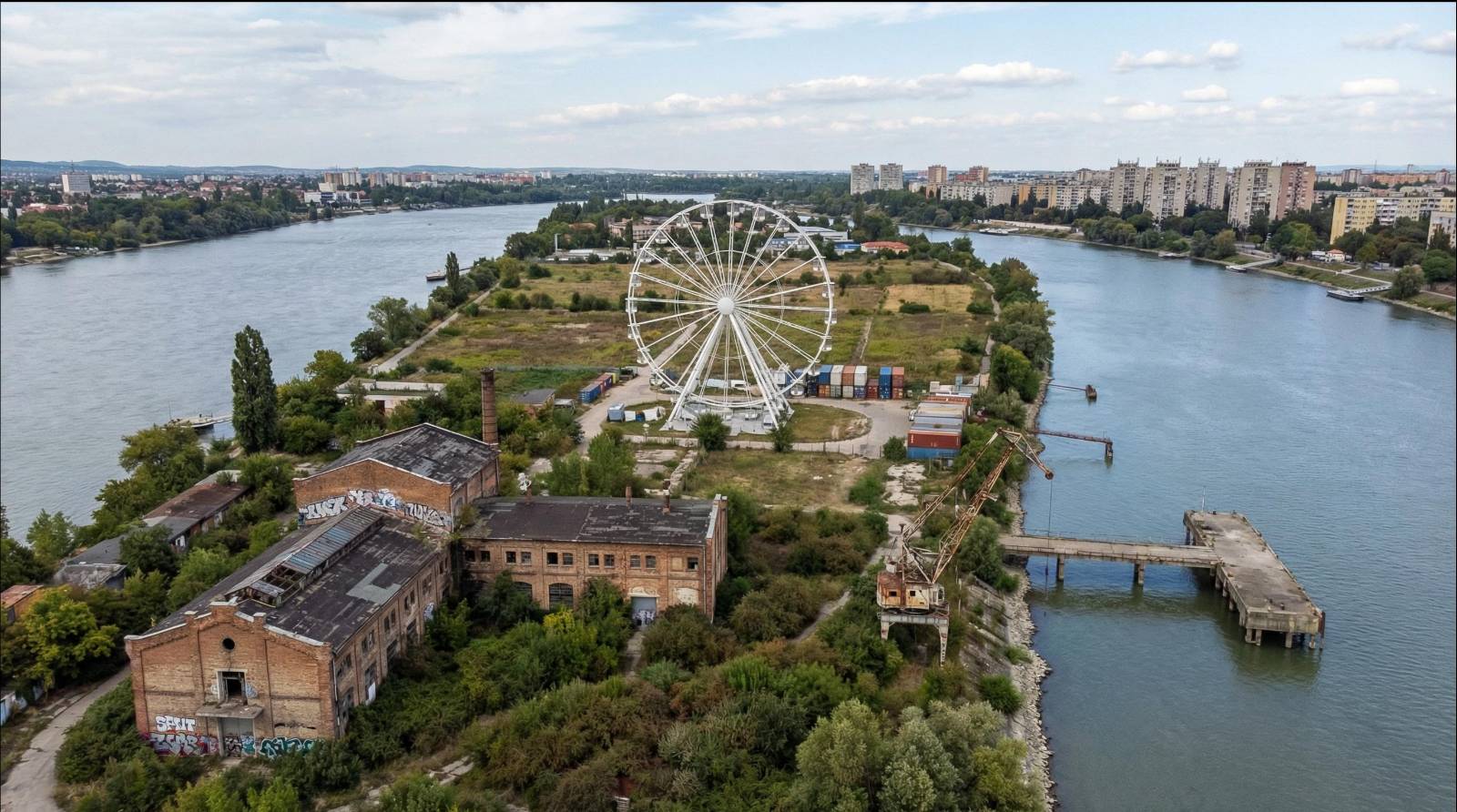
Jázmin Yom-Tov, the 24-year-old daughter of businessman Arie Yom-Tov, is purchasing an 8-hectare section of Népsziget for HUF 2.9 billion (EUR 7.60 million). The real estate mogul told Átlátszó that they are planning entertainment-related investments and are also examining the former Ganz Shipyard site from this perspective. There are buildings on the site that are protected as historical monuments, and there are also suspicions of soil contamination.
A high-value real estate sale has been posted in recent days, involving a property covering more than 8 hectares of industrial and agricultural (forest) land on the Danube island Népsziget, part of the 13th district of Budapest. The area used to be the site of the now-defunct Ganz ship factory. The buyer is a young woman, Jázmin Yom-Tov, who is paying nearly HUF 3 billion (EUR 7.87 million) for the land to the seller, Dr. Mihály Gábor Horváth, provided that no one exercises their right of first refusal.

In 2006, the land was purchased by EEH.Népsziget Zrt., which was owned by a Liechtenstein shell company. During its short existence, this company regularly appeared on the tax authority’s list of companies with tax debts exceeding HUF 100 million (EUR 0.26 million) for 180 consecutive days and was later liquidated. From there, the site was transferred to CIB Ingatlanlizing Zrt., and remained in the ownership of the CIB banking group for several years.
In 2018, the former manufacturing plant was purchased by Dr. Mihály Gábor Horváth. The same name has been listed in court documents as the lawyer of
Arie Yom-Tov, an Israeli real estate investor known for developing the Gozsdu Court, the popular Budapest leisure complex.
A month later, XPOSE Kft. acquired a mortgage right worth HUF 2 billion (EUR 5.24 million) on the property. According to the contract, the buildings on the property are in a dilapidated condition and need to be demolished, and several structures are protected as historical monuments and local heritage sites. Under the contract, the future owner also assumed maintenance obligations.
The purchase price of the property is approximately three billion forints, which the buyer must transfer within 60 days of signing the contract. However, the property is not unencumbered, as there are several significant items listed on the title deed. The local government of District XIII has registered an enforcement right of nearly HUF 24 million (EUR 63,000) on the land, as well as a building tax liability of more than HUF 55 million (EUR 144,000). (As we have learned, the local government was not interested in the land.)
Urbex video about the abandoned building of the Ganz shipyard. The factory closed in 1993 and the area has been unused ever since.
XPOSE Kft. has two owners: Imre Fazakas, who has been the majority owner of the company since May last year, and Kazlea Limited. Imre Fazakas’ name has appeared in the press before, as he was the former regional representative of the Russian oil company Yukos.
He was also mentioned in the Croatian corruption case that resulted in Zsolt Hernádi, the head of MOL, being sentenced to prison.
(Fazakas is allegedly Hernádi’s confidant.) According to a G7 article from March last year, sources described Fazakas as a liaison between Russian and Hungarian interest groups.
The other owner, Kazlea Limited, is represented in Hungary by Ágnes Yom-Tov, the mother of Jázmin Yom-Tov, while the managing director of XPOSE Kft. is Arie Yom-Tov, the father of Jázmin Yom-Tov. The company did not publish a report last year, so its current financial situation is unknown, but at the end of 2023, it had long-term liabilities (i.e., debts) amounting to HUF 4.9 billion (EUR 12.85 million).
The close relationship between Kazlea Limited and the Yom-Tov family is also demonstrated by the fact that a Dutch sport horse website, Sportprohorses.com, is listed as one of the Yom-Tov Group’s businesses, and the owner and operator of the site is Kazlea Limited. This company is also listed as the owner of the horse of Jázmin Yom-Tov (who is a professional dressage rider), For Joy.

Jázmin Yom-Tov source: Facebook
According to the contract that has just been posted, Jázmin Yom-Tov is also a registered farmer and has been living in the district for more than three years, which gives her the right of first refusal under the laws governing the sale of agricultural and forestry land.
A search for Yom-Tov Jázmin reveals that the Hungarian Equestrian Federation named her “2022’s Athlete of the Year,” and that she was the most successful Hungarian rider in the 2024 FEI U25 world rankings.
Although Jázmin Yom-Tov’s name is probably not well known among Hungarian real estate developers, her father, Arie Yom-Tov, is an Israeli-born investor and real estate developer living in Hungary who has been active in the Budapest real estate market since the late 1990s. He is best known for the Gozsdu Court, which he conceived and developed—one of his first major successes in the party district.
An amusement park is planned, but the area may be contaminated
According to a 2017 description on the Újpest website, the property on Népsziget:
“The proportion of green space is significant, around 40%, taking into account its function, which is mainly due to the vegetation on the riverbank and the southern forest area. More than half of the green areas consist of degraded grasslands. Contiguous green areas appear in the aforementioned 30–40-meter strip along the Danube (except for the port section). The 15–20-meter strip facing the Danube is disordered; woody and shrubby vegetation is characteristic among the broken concrete slabs, consisting largely of pioneer and adventitious species (poplars, willows, white acacia, green maple). The remaining part is grassy and well-maintained. Along the access road on the northwestern side of the site, there is a 200-meter-long row of black poplars (Populus nigra ‘Italica’). The trees are around 30 years old and in moderate health.”
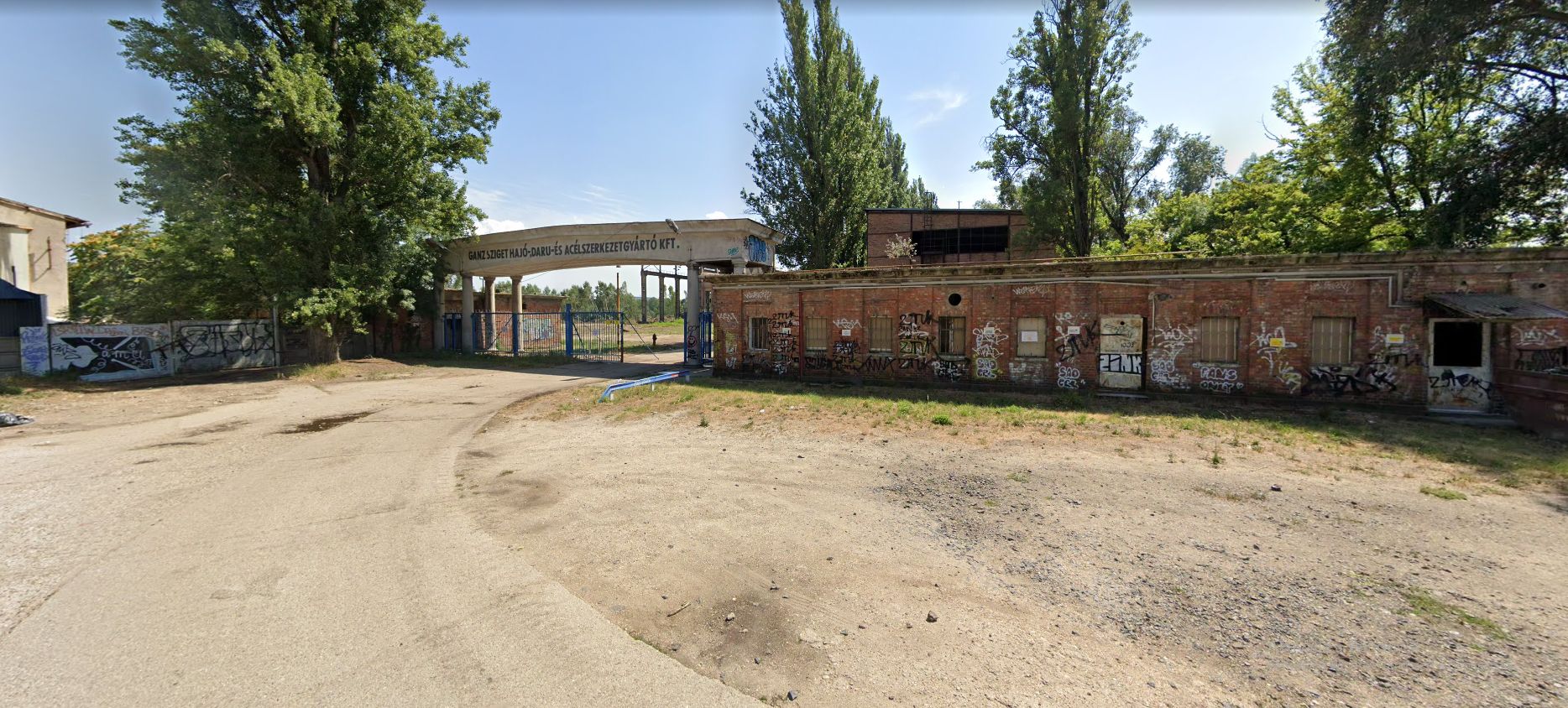
The former site of the Ganz ship factory, source: Google Maps
Even more interesting is how the same document describes the condition of the soil. A soil mechanics, hydrology, and contamination study was conducted in 2007 for the 13th district of Népsziget, based on four sampling boreholes. Based on the samples taken from the boreholes, the metal content values of the groundwater fell into the “alarming” category, while the dissolved hydrocarbon content of the groundwater did not exceed the action level.
The concentration of bound hydrocarbons and lead in the soil samples also fell into the “noteworthy” category, while the total soluble metal content was moderate and did not exceed the action level.
“Based on the above, and considering the once dominant industrial activities on Népsziget, the area under investigation should be treated as potentially contaminated, especially the former Ganz factory and the MAHART Ship Repair site.”
In connection with the purchase, we contacted Arie Yom-Tov to ask whether he was behind the deal to purchase the former Ganz site, or whether it was an independent investment by his daughter, and what kind of real estate development they were planning for the area. In an interview last year, the real estate mogul said that his plans for Budapest included the creation of a large amusement park, a “small Disneyland,” and an international convention center.
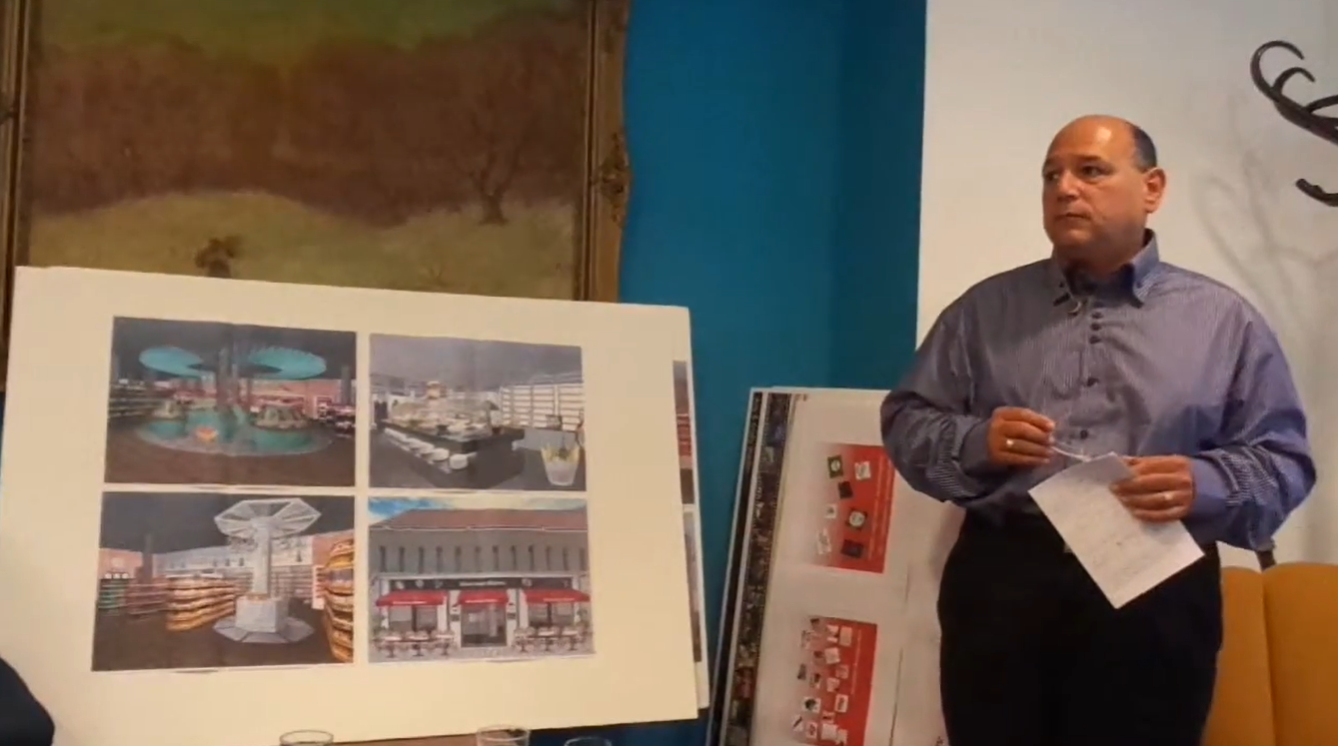
Arie Yom-Tov at a lecture in 2015. Source: Public Economic Chronicle Video Magazine/YouTube
Arie Yom-Tov confirmed to Átlátszó that his daughter will purchase the area on Népsziget.
“She is my daughter, a member of our family, and we wish to work closely and harmoniously on this amusement park project, if and when it comes to fruition. As I mentioned in my previous interview, we believe that an indoor/outdoor entertainment concept for families and children would fit well into the existing Hungarian market, serving both local residents and foreign visitors. We are currently examining several possible locations, and the Ganz Shipyard could be one suitable option for such a development. We do not currently know the exact situation regarding specific questions related to the soil conditions at the Ganz site. Of course, if either party begins development there, they must fully comply with all relevant regulations and take the necessary measures accordingly.”
Investor and bulldozer
Since the 1990s, Arie Yom-Tov’s name has been closely associated with the Budapest real estate market, particularly with often controversial transactions in Districts VI and VII. His real estate development activities have been characterized by political connections, offshore companies, and “demolition-based urban renewal,” while properties worth billions have changed hands, sometimes to the detriment of residents.
Thirty years ago, he was working as a business promoter for large Israeli investment companies. He came into contact with influential figures such as Moti Zisser, head of Plaza Centers, and Ehud Amir, head of Autóker Holding. However, the real breakthrough for Yom-Tov came in the early 2000s, when socialist mayors came to power in the 6th and 7th districts.
György Fürst, then deputy mayor of the 7th district of Budapest, played a prominent role among them. In his role as “liquidator,” Fürst “freed” the district from dozens of buildings, including those at 40 Király Street and the palaces on Andrássy Avenue, which later fell under Yom-Tov’s sphere of influence. Citing a lack of funds, local governments sold properties located in the World Heritage protection zone, often by denying residents their right of first refusal and then evicting them. Yom-Tov’s companies acquired numerous properties in the city center, especially in the former Jewish quarter in District VII.
Regarding Fürst, Arie Yom-Tov recently stated that he had only met him a few times, that there was no relationship between them, and that he had not seen or heard from him in twenty years.
Yom-Tov received negative attention due to the infamous case of a villa on Andrássy Road, a World Cultural Heritage site in Budapest.
The building, owned by a company linked to Yom-Tov, was undergoing renovation in 2007. During the work, the firewalls were knocked down, the upstairs stairs were demolished, and the roof was broken into. In 2009, the project company halted construction, and the condition of the building continued to deteriorate. In the summer of 2014, for reasons that remain unclear, a fire broke out in the building. The dryness of the roof structure and the fact that Yom-Tov’s company had removed the firewalls in the attic contributed to the rapid spread of the fire.
However, as we reported in 2016, the fire did not seem to weaken Arie Yom-Tov’s position; in fact, he launched new projects in the city.
Written by Zsuzsa Zimre, translated by Zalán Zubor. Contribution by Eszter Katus. The original Hungarian version can be found here. Cover image: illustration created with artificial intelligence.
Share:
Your support matters. Your donation helps us to uncover the truth.
- PayPal
- Bank transfer
- Patreon
- Benevity
Support our work with a PayPal donation to the Átlátszónet Foundation! Thank you.
Support our work by bank transfer to the account of the Átlátszónet Foundation. Please add in the comments: “Donation”
Beneficiary: Átlátszónet Alapítvány, bank name and address: Raiffeisen Bank, H-1054 Budapest, Akadémia utca 6.
EUR: IBAN HU36 1201 1265 0142 5189 0040 0002
USD: IBAN HU36 1201 1265 0142 5189 0050 0009
HUF: IBAN HU78 1201 1265 0142 5189 0030 0005
SWIFT: UBRTHUHB
Be a follower on Patreon
Support us on Benevity!