

“We Were the Guinea Pigs”: Allegations of Fear and Humiliation at the Hungarian State Opera’s Ballet School

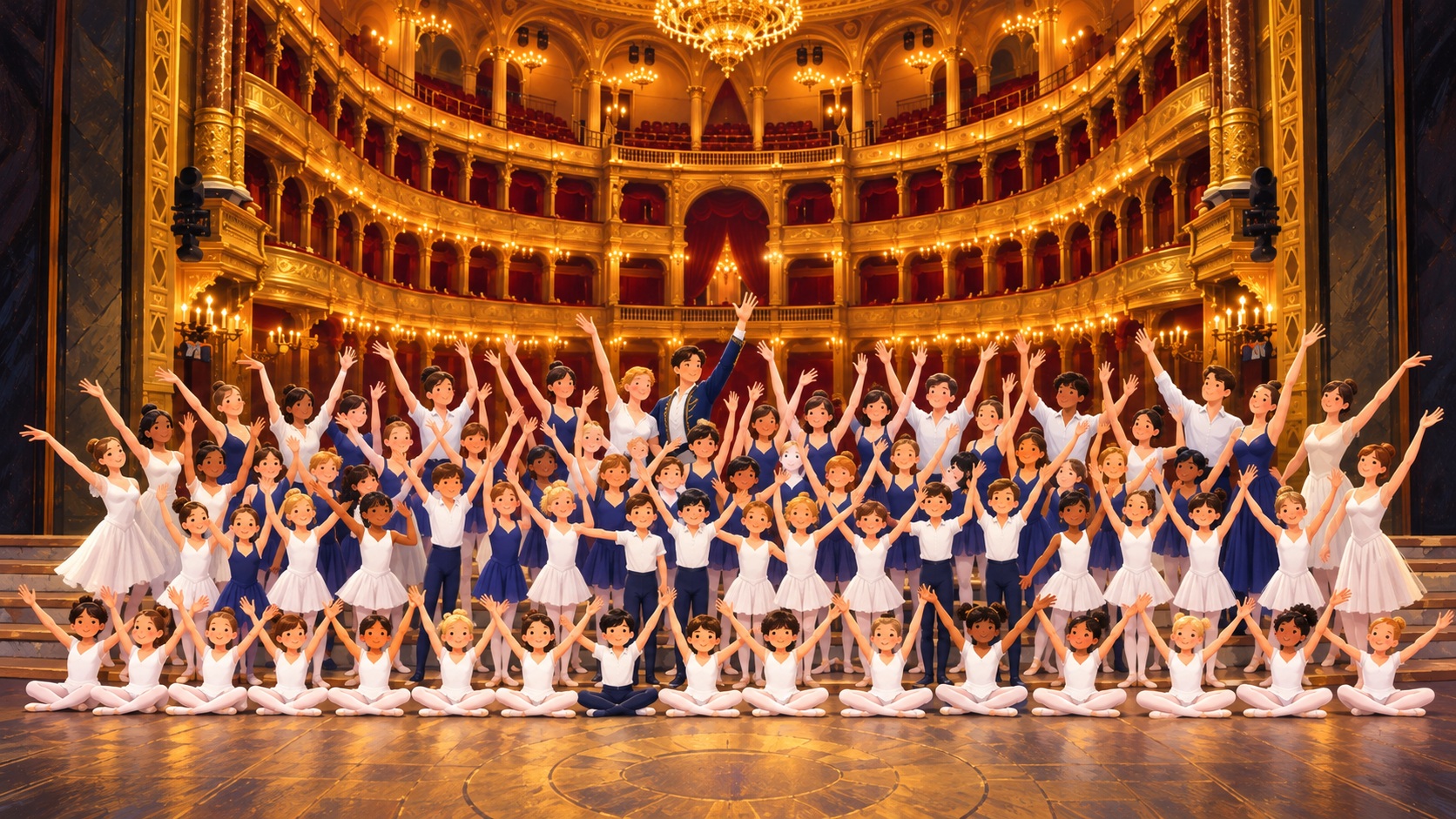
Parents, former students and teachers have described an atmosphere of fear, humiliation and excessive workloads at the Hungarian National Ballet Institute, a fee-paying ballet school operated by the Hungarian State Opera. While the Opera rejects allegations of mistreatment, Átlátszó’s investigation also uncovered substantial state funding for a foundation supporting the school, previously headed by the wife of a government state secretary. The Prime Minister’s Office has confirmed that it is investigating a potential conflict of interest concerning some of the grants.
In September 2026, a newly established Dance Arts Committee recommended that Zoltán Tarr initiate an ethics investigation concerning the Hungarian State Opera’s ballet company. Meanwhile, the Opera is undergoing a review ordered by the Ministry responsible for Social Relations and Culture.
Against this backdrop, Átlátszó interviewed parents, former students, professional dancers and former teachers of the Hungarian National Ballet Institute (MNBI). Most requested anonymity, fearing that speaking publicly could have consequences for their children’s education and future careers.
Our investigation also examined the finances of a foundation supporting the school, which has received substantial government funding and maintains connections to figures close to the former Fidesz government.
A prestigious name, but no recognised qualification
The Hungarian National Ballet Institute was established in 2016 by the Hungarian State Opera, offering ballet training to children from the age of four. Despite its official-sounding name, it operates as a fee-paying course rather than an accredited educational institution.
Monthly tuition ranges from HUF 17,000 for beginners to HUF 55,000 for sixth-year students. Training hours increase considerably as pupils progress, reaching fifteen 90-minute sessions per week.
The school is led by Tamás Solymosi, the Opera’s ballet director, and artistic director Radina Dace.
Unlike the state-funded Hungarian Dance University (MTE), whose programmes can lead to recognised qualifications, MNBI cannot issue an accredited diploma. Although accreditation has been discussed for years, the Opera confirmed that no formal procedure has been initiated.
One parent, Szilvia Sulyok, whose child joined the institute’s first intake in 2016, recalls that families were promised an accelerated training programme that could prepare students for the stage in as little as five years.
“We were the guinea pigs,” she said.
After an initially positive first year, the workload, tuition fees and expectations increased considerably.
According to the Opera, six years of training may be sufficient for students to perform certain corps de ballet roles alongside professional dancers, although this does not mean they have completed their professional training.
Thousands of performances involving children
One of the central complaints concerns the considerable number of performances in which MNBI students participate.
According to the Opera’s programme for the 2026–2027 season, children from the institute are expected to appear in 15 productions comprising 156 performances. The Nutcracker alone accounts for 51 performances, with 53 child roles in each.
Multiplying the number of performances by the number of child roles produces a total of 4,256 child-performance slots during the season, including 2,703 in The Nutcracker. These figures do not represent individual children or the actual number of appearances made by each student.
The Opera says most productions have double casts and individual pupils therefore participate in only a fraction of the scheduled performances. However, it did not disclose how many students share these roles.
By comparison, only 16 students from the Hungarian Dance University participated in three Opera productions during the 2024–2025 season. The university received no invitations for ballet performances in 2026–2027.
Several parents and former students told Átlátszó that the intensive rehearsal schedules leave children with little time for regular schooling, family life or recovery. Some reportedly switch to individual study arrangements to accommodate their ballet commitments.
One former student described spending entire days at the Opera or its Eiffel Workshop House, sometimes from 8 a.m. until 9 p.m., with weekends also devoted to performances and rehearsals. The student claimed that excessive workloads contributed to injuries and substantial absences from school.
Children receive between HUF 2,000 and HUF 4,000 per performance, depending on their roles. Their participation also requires authorisation from child welfare authorities.
The Opera disputes that students are overworked, arguing that stage experience is an essential part of their education and that roles are assigned according to age and ability. It says schedules are adjusted during particularly demanding rehearsal periods.
Some parents nevertheless described a culture in which refusing a performance could affect a child’s future opportunities.
“If someone says no to a performance, the teachers start ignoring them,” one parent claimed.
Another compared the situation to an abusive relationship from which the children find it difficult to escape.
Public humiliation and eating disorders
Former students and parents also described verbal humiliation, excessive criticism of children’s bodies and an atmosphere of intimidation.
One former pupil, who subsequently transferred to another institution, praised the technical standards of the training but criticised the treatment of students.
“The main experience for most of us was public humiliation,” the former student told Átlátszó.
According to their account, teachers sometimes criticised pupils through microphones during stage rehearsals, commenting on their performance or physical appearance in front of other children. Some students allegedly feared the artistic director and teachers whose reactions they considered unpredictable.
The former pupil also reported eating disorders among students, including cases in which anorexia forced young dancers to abandon their careers.
The institute does not employ a psychologist. The Opera confirmed this, adding that it intends to consider hiring a part-time specialist if finances permit.
According to the Opera, it adopted child protection guidelines in cooperation with the Hintalovon Foundation in 2024 and introduced a confidential reporting mechanism for potential abuse.
The Opera says it knows of only one student who was hospitalised for an eating disorder among the more than 1,000 children who have attended the institute over the past decade.
Parents also described incidents in which very young children were allegedly encouraged to lose weight. One mother claimed her seven-year-old daughter was repeatedly told that she should skip dinner because of her appearance on stage.
The Opera categorically denies conducting weight measurements or deliberately humiliating students. It maintains that any concerns about children’s physiques are discussed discreetly with parents.
Another parent described an incident after a performance of The Nutcracker in which children were allegedly prevented from leaving while staff investigated damaged or missing makeup. According to the mother, her daughter was extremely distressed and said adults had shouted at the children and threatened to confiscate their phones.
The Opera disputes this account, saying that staff conducted an approximately ten-minute check of children’s bags in the presence of a security employee following a suspected theft. It denies that shouting or intimidation occurred.
Rivalry between Hungary’s ballet institutions
The investigation also revealed longstanding tensions between the Hungarian National Ballet Institute and the Hungarian Dance University.
Former MNBI ballet master Roland Csonka described a professional and personal conflict between Opera ballet director Tamás Solymosi and former university rector György Szakály.
According to Csonka, the dispute contributed to Solymosi’s decision to establish an independent training programme rather than cooperate with the university.
“For me, the biggest problem was that the interests of the children were pushed into the background because of the conflict between the leaders,” he said.
Csonka also described professional difficulties he attributed to the rivalry, including his experiences when applying for teacher training at the university.
The university told Átlátszó that 42 children had transferred from MNBI during the previous six years.
The Opera maintains that parents often choose the university because it offers state-funded, accredited education, recognised qualifications and general schooling alongside dance training.
MNBI does not maintain detailed dropout statistics, although the Opera estimates average student turnover at approximately 10 percent.
A foundation with political connections
Átlátszó also investigated the finances of the Foundation for the Ballet Students of the Hungarian State Opera (Magyar Állami Operaház Balettnövendékeiért Alapítvány), established in 2019.
Its founder was ballet artist Mária Aradi. Another figure involved in its establishment was Annamária Steiner-Isky, who became chair of its board of trustees in 2021.
At the time, Steiner-Isky worked alongside then Justice Minister Judit Varga. Her husband, Attila Steiner, served as a government state secretary responsible for energy, climate policy and the circular economy.
According to Szilvia Sulyok, the foundation emerged from a parents’ initiative to collect donations and potentially use political connections to secure funding for the ballet school.
The Opera confirmed that the foundation originated from a parents’ initiative, but said its initial purpose was to rent rehearsal facilities during the Opera House’s renovation.
Financial reports show that the foundation received approximately HUF 335 million in revenue between 2019 and 2025.
Our investigation identified at least HUF 91 million in direct state funding during that period, with another HUF 10 million awarded in 2026.
The identified public funding includes:
- HUF 44 million for organising the Hungarian Ballet Grand Prix in Veszprém.
- HUF 33 million through six individual grants from the Ministry of Human Capacities, including HUF 12 million for costumes for the Opera’s KisCsipke production.
- HUF 24 million awarded by the Prime Minister’s Office between 2021 and 2026.
The foundation also received HUF 20 million from the MOL–New Europe Foundation and approximately HUF 4.5 million through donations of 1 percent of personal income tax.
Altogether, these identified sources account for HUF 125.5 million, although they do not represent the foundation’s entire revenue.
Payments to teachers at a state-funded ballet competition
The foundation received HUF 44 million in public funding to organise the Hungarian Ballet Grand Prix, held in Veszprém in June 2023 as part of the European Capital of Culture programme.
The project’s total reported cost was HUF 107,389,179.
Documents obtained by Átlátszó show that competition judges received approximately HUF 510,000–680,000 each.
Payments were also recorded for preparing students for the competition. Three teachers already working at MNBI received fees under this heading: Dimitrij Kirejko was allocated HUF 573,000, Radina Dace HUF 716,000 and Adrienn Vetési HUF 300,000.
Initially, Dace denied receiving any payment from the competition. After Átlátszó provided the financial records, she clarified that she had received money from the foundation rather than directly from the competition organiser, and that the amount actually transferred to her was substantially lower than the recorded gross sum.
The Opera explained that additional competition preparation falls outside teachers’ regular contractual duties and therefore requires separate remuneration.
The financial documents also show delays in reporting the use of the competition funding.
The Prime Minister’s Office investigates a potential conflict of interest
One of the most significant findings concerns four grants awarded to the foundation by the Prime Minister’s Office between 2021 and 2026, totalling HUF 24 million.
Documents obtained from the Bethlen Gábor Fund Management company show that the funding was awarded following individual applications rather than through open competitive tenders.
The foundation received HUF 5 million in 2021, another HUF 5 million in 2023, HUF 4 million in 2025 and HUF 10 million in 2026.
Expenditure included rehearsal-room rentals, costumes, teachers’ fees, accounting, marketing services and international travel.
The 2023 accounts included HUF 999,900 for marketing consultancy and HUF 1.5 million for a Budapest–Osaka–Tokyo flight associated with an appearance by MNBI students at the Liszt Institute in Tokyo.
Reporting was frequently delayed: the 2021 grant was finalised almost ten months late, while the 2023 accounts were completed approximately sixteen months after the deadline.
More importantly, the foundation’s leadership raises questions about eligibility for public funding.
Steiner-Isky chaired the foundation at the time of the 2023 grant and personally signed the funding application. Her husband, Attila Steiner, was then a government state secretary.
The applicable rules prohibit certain public grants to organisations whose governing bodies include a person living in the same household as a state secretary.
Nevertheless, Steiner-Isky’s declaration dated 13 October 2023 stated that no grounds for exclusion existed.
Átlátszó asked the Prime Minister’s Office whether the funding may have violated the relevant conflict-of-interest provisions.
The ministry replied that a conflict of interest could indeed have existed, subject to confirmation that the couple shared a household at the time.
It also confirmed that it is currently examining the accuracy of the foundation’s declaration and the possible legal consequences of any public funding obtained without proper eligibility.
The ministry’s response does not establish that a violation occurred, but confirms that the circumstances are under official investigation.
Did donations influence children’s opportunities?
Several parents also alleged that families felt pressured to donate to the foundation.
Some believed that larger donations or influential personal connections could improve a child’s chances of receiving prominent roles or preferential treatment.
“We couldn’t donate enough for the role of Marie [the leading child role in The Nutcracker], but as soon as we paid, we received more opportunities,” one parent claimed.
Szilvia Sulyok also alleged that children from politically connected families appeared disproportionately often in prominent positions, including publicity photographs and important places in ballet classes.
Other parents said they were directly asked whether they could support the foundation financially or help identify potential patrons.
The Opera strongly rejects any suggestion that parental donations or political connections influence casting decisions.
According to the institution, all roles are allocated by ballet masters solely on professional grounds, while contributions to the foundation are entirely voluntary.
Nevertheless, the accounts collected by Átlátszó reveal serious disagreements between families and the institution over children’s welfare, transparency and the balance between demanding artistic training and the protection of young performers.
As the authorities examine the foundation’s state funding and the Opera undergoes institutional scrutiny, the central question remains whether the interests and wellbeing of children are adequately protected in Hungary’s elite ballet training system.
Written by Zsuzsa Zimre, the Hungarian version of the story is here. English translation and cover image was prepared with help of artificial intelligence.
Share:
Your support matters. Your donation helps us to uncover the truth.
- PayPal
- Bank transfer
- Patreon
- Benevity
Support our work with a PayPal donation to the Átlátszónet Foundation! Thank you.
Support our work by bank transfer to the account of the Átlátszónet Foundation. Please add in the comments: “Donation”
Beneficiary: Átlátszónet Alapítvány, bank name and address: Raiffeisen Bank, H-1054 Budapest, Akadémia utca 6.
EUR: IBAN HU36 1201 1265 0142 5189 0040 0002
USD: IBAN HU36 1201 1265 0142 5189 0050 0009
HUF: IBAN HU78 1201 1265 0142 5189 0030 0005
SWIFT: UBRTHUHB
Be a follower on Patreon
Support us on Benevity!
