

New government inherits gifts and landmines after abolishing Orbán-era public trust foundations
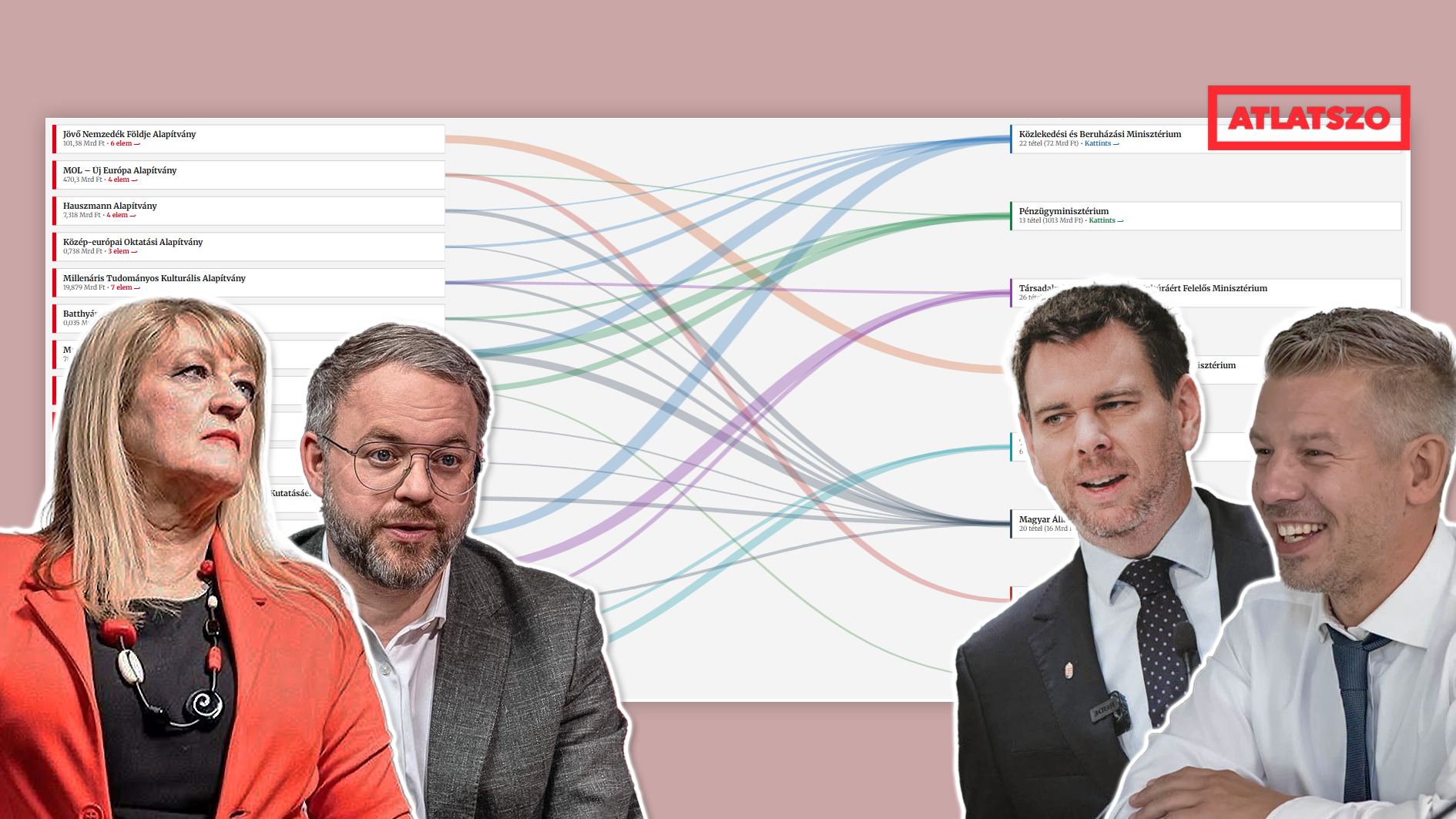
More than HUF 1,000 billion (EUR 2.75 billion) in assets had returned to direct Hungarian state ownership by the end of the summer after the new parliament began dismantling Hungary’s system of public-interest asset management foundations, known by the Hungarian abbreviation KEKVA. The foundations had been a major element of the previous Orbán government’s restructuring of universities, cultural institutions, state companies and other public assets. In several cases, institutions that had originally been private were also brought into the KEKVA system, making it legally possible for the new government to take over their assets after the foundations were abolished.
The KEKVA framework was established in 2021. The state transferred universities, companies, properties, agricultural land and large shareholdings to foundations whose boards often included politicians and public figures linked to Fidesz or the Orbán government. The arrangement also became a source of conflict with the European Union, which excluded Hungarian universities controlled by KEKVAs from its Erasmus scholarship program.
The network of foundations were often described as “election-proof” system which could preserve the influence of Viktor Orbán’s allies over educational, cultural, and economic institutions even after an electoral loss, as the directors of KEKVAs could only be removed with a constitutional parliamentary majority. However, after the April 2026 election, the Tisza Party did gain such a majority, allowing it to not only remove Orbán-appointees, but to completely phase out the system. Thus non-university KEKVAs were abolished during the summer, while foundations maintaining universities are scheduled to disappear by 1 August 2027.
Assets controlled by KEKVAs have been reclaimed by the state, including real estate and corporate shares.
Among the KEKVAs already abolished, one of the largest portfolios belonged to the Mathias Corvinus Collegium Foundation (MCC).
Its MOL and Richter shareholdings alone were worth HUF 662.21 billion (EUR 1.82 billion). The shares had been transferred to MCC free of charge by the state in 2020 and have now returned to state ownership. The state also gained indirect control of the Libri book retail and publishing group, which MCC had acquired in a market transaction in 2023.
Through MCC Liber Invest and MCC Media Holding, the foundation also controlled the publisher of Mandiner, a pro-Fidesz online and weekly print magazine. Mandiner used to be published by Lőrinc Mészáros’s Mediaworks, until MCC (already a public foundation) acquiered the magazine, which has eventually led to it falling into the new government’s control (specifically, that of the Ministry of FInance). Following the takeover, Mandiner’s online editor-in-chief and the publisher’s CEO were dismissed, and on 9 September the website ceased normal publication, leaving only its archive accessible.
The Ministry of Finance also controls MCC’s MOL and Richter shares, while its numerous property development subsidiaries have been placed under the control of the Ministry of Transportation and Development headed by Dávid Vitézy. One of these companies, Gerhardus Talentum, also has a role in the governance structure of MCC Brussels (a lobbying organization officially independent from MCC Hungary), potentially giving the Hungarian state a degree of influence over the Brussels organisation.
Another former private institution affected is the Batthyány Lajos Foundation. Established in 1991, it became an important distributor of public funds under the Orbán government, and was converted into a KEKVA in 2021. During this process, it received the expensive Lónyay-Hatvany villa in Budapest’s Castle District as its headquarters; the property has now reverted to the state.
The foundation also operated the Danube Institute, an international think-tank. After the change of government, its foreign researchers’ contracts were not renewed, while the institute’s leaders established a separate Danube Institute USA organisation, which is now attempting to secure funding from American donors.
The Foundation for the Land of Future Generations (Jövő Nemzedék Földje Alapítvány), chaired by former minister János Lázár, controlled assets Átlátszó could quantify at more than HUF 101 billion (EUR 277.3 million). Its most important holding was the state-owned Mezőhegyes horse farm and agricultural training centre, which reported HUF 75.7 billion (EUR 207.8 million) in equity and HUF 8.6 billion (EUR 23.6 million) in revenue for 2025. Despite this revenue, and state subsidies in the billions, the farm still operated at a loss.
Lázár’s foundation also managed the rights to 8,200 hectares of agricultural land and almost 1,500 hectares of forest, and held stakes in two large logistics companies, ATEV and Concordia Közraktár.
Several premium properties have also returned directly to the state. These include former MCC properties, assets transferred to the Makovecz Campus Foundation and the Hauszmann Foundation’s real-estate portfolio. The former OPNI psychiatric hospital complex in Budapest is another example.
The Orbán government had planned to turn the site into an international boarding school and spent more than HUF 1 billion (EUR 2.75 million) on the project, but the school never opened.
The property and the company created to develop it are now under the transport and investment ministry.
The state has also taken over a substantial real-estate portfolios outside of Hungary from the Foundation for Preserving Built Heritage in Central Europe, through its subsidiaries, MANEVI Inc.. and Comitatus-Energia.
Holdings linked to former president János Áder’s Blue Planet Climate Protection Foundation were also nationalised; the largest is the KBKB investment fund manager, which has HUF 10 billion (EUR 27.5 million) in equity. Companies belonging to the ZalaZONE and ÉLVONAL foundations together hold more than HUF 100 billion (EUR 274.6 million) in equity.
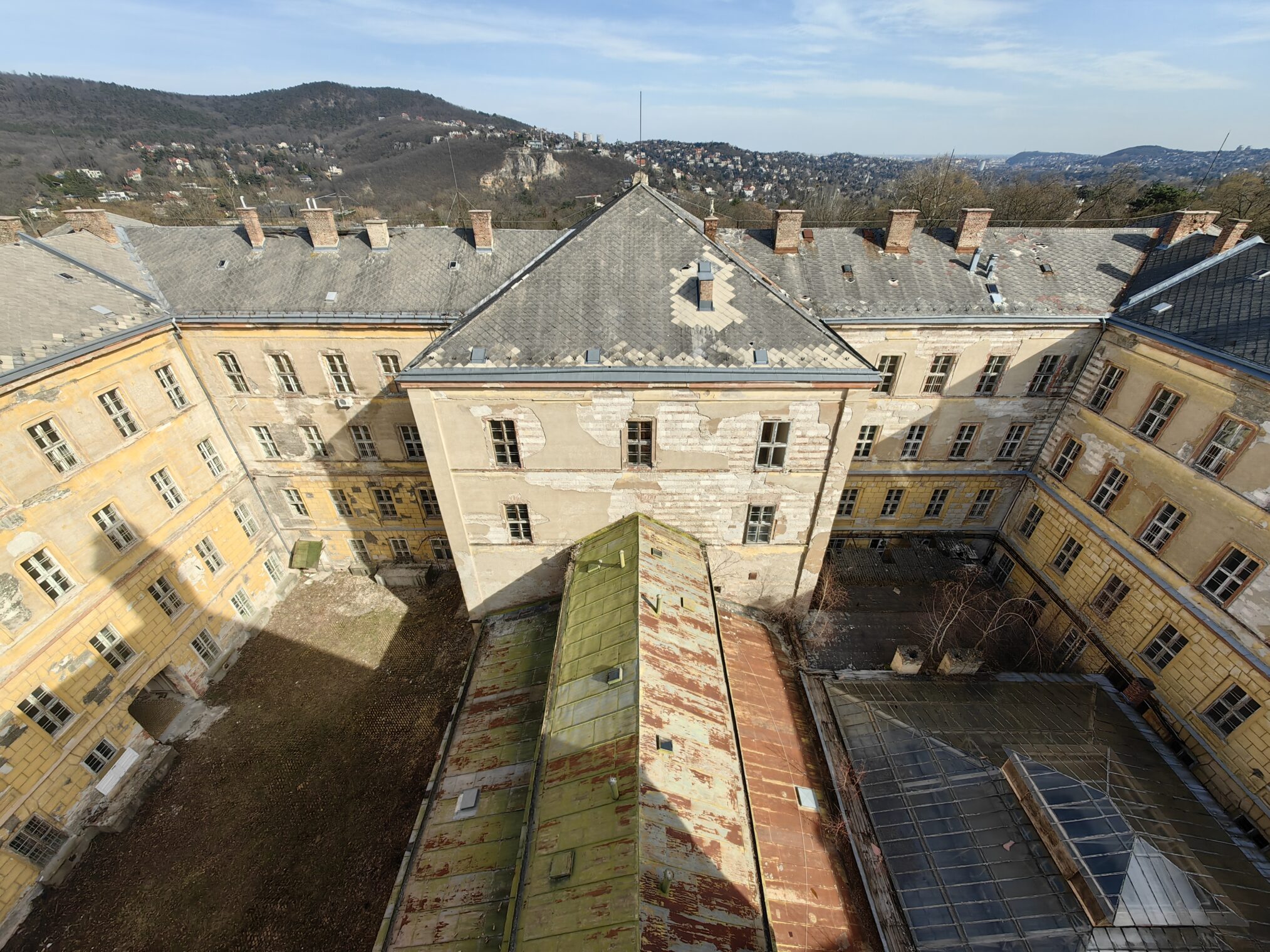
The OPNI building in 2023. Source: Wikimedia Commons
The state also reclaimed an extensive network of companies and properties from the Foundation for Hungarian Culture, previously headed by Szilárd Demeter. These included the Petőfi Cultural Agency (PKÜ), a network of art studios spanning the country, the National Talent Development Ltd. (a company that subsidized the training of journalists for the state media), and about a thrid of Budapest’s Hajógyári Island, the location of the Sziget music festival.
PKÜ and its assets would be managed by the Ministry of Social Relations and Culture, led by Zoltán Tarr. Among other pressing issues, the ministry will have to deal with an extremely long-term lease agreement regarding the Hajógyári Island property: in 2025, PKÜ leased the location to a company for 50 years to a company linked to the brother of the former Minister of Economy, Márton Nagy.
The Foundation for Research on the History and Society of Central and Eastern Europe (KKETTKA) formerly headed by historian Mária Schmidt used to controll valuable properties. Upon its creation, the KEKVA received a villa in Buda and the headquarters of the Habsburg Historical Institute from the state, as well as HUF 2.2 billion (EUR 6.0 million) in subsidies for renovation.
More significant than the real estate, however, was the control of institutions including the House of Terror Museum, the Institute of the 20th Century, the Habsburg Historical Institute and the Imre Kertész Institute, the organization managing the Nobel laurate’s estate.
Shortly after the dissolution of the KEKVA, Minister Zoltán Tarr terminated Schmidt’s appointment as director-general of the House of Terror Museum.
The MOL – New Europe Foundation (a KEKVA created to subsidize youth sports and other charitable causes) was an unusual case because it had been established jointly by the state and MOL in 2021. The two founders contributed equal packages totalling 85,955,992 MOL shares, worth more than HUF 430 billion (EUR 1.18 billion) in September 2026. MOL decided not to continue the foundation’s activities in another foundation structure, so the organisation was dissolved without a legal successor: MOL and the state each recovered the 42,977,996 shares they had originally contributed.
The state’s returned package represents roughly 5.25 percent of MOL and was worth more than HUF 215 billion (EUR 590.3 million) at mid-September market prices. The finance minister now exercises the state’s ownership rights over these shares.
Written by Zalán Zubor, data visualization by Krisztián Szabó. The english summary was prepared with the assistance of artificial intelligence. The original Hungarian version of the story can be found here. Cover image: montage by Átlátszó
Share:
Your support matters. Your donation helps us to uncover the truth.
- PayPal
- Bank transfer
- Patreon
- Benevity
Support our work with a PayPal donation to the Átlátszónet Foundation! Thank you.
Support our work by bank transfer to the account of the Átlátszónet Foundation. Please add in the comments: “Donation”
Beneficiary: Átlátszónet Alapítvány, bank name and address: Raiffeisen Bank, H-1054 Budapest, Akadémia utca 6.
EUR: IBAN HU36 1201 1265 0142 5189 0040 0002
USD: IBAN HU36 1201 1265 0142 5189 0050 0009
HUF: IBAN HU78 1201 1265 0142 5189 0030 0005
SWIFT: UBRTHUHB
Be a follower on Patreon
Support us on Benevity!
