

Hungary’s Energy Power Ambitions Deepen Regional Dependence on Russia

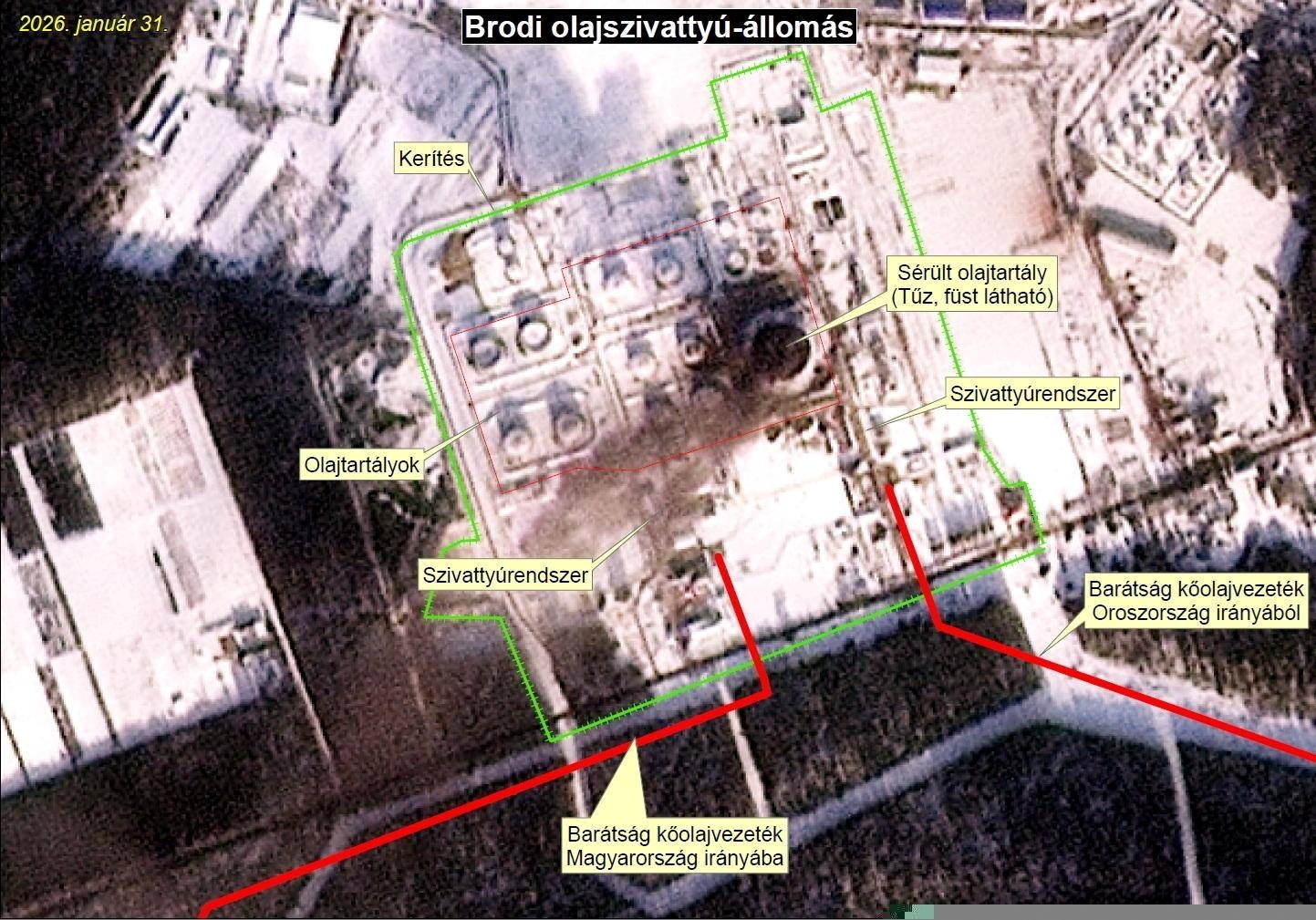
In recent years, Hungarian energy policy has been largely shaped by the vision of becoming a regional energy distribution center, an energy hub. However, recent geopolitical developments have clearly shown that this was not built on a solid foundation. The war in the Middle East has escalated rapidly, global oil prices have climbed, and long-term price increases are expected on the European natural gas market. Amid the technical and political uncertainties surrounding the Druzhba pipeline and diplomatic tensions around the southern alternative route, Hungary’s position can no longer be described as an active distributor, but rather as an import-dependent and exposed country. In this environment, security of supply is no longer protected by long-term contracts but is now directly tied to regional and global power dynamics.
The consequences of Hungary’s lack of energy sovereignty and its failure to take adequate energy security measures are now emerging from multiple directions. The crisis surrounding the disruption of the Druzhba oil pipeline remains unresolved, while a new war has erupted in the Middle East with no end in sight. The energy market recalls the period of the outbreak of the war in Ukraine, with energy prices suddenly surging. The difference is that the EU has achieved significant results in improving its energy security, and not only since 2022, but it had already begun building its diversified infrastructure as a result of the gas crises of 2006 and 2009. Since then, it has repeatedly been argued that Russia cannot be considered a reliable partner.
In contrast, Hungary is still considered one of Russia’s most persistent European partners. Cheap Russian energy sustains, for example, the utility price reduction labeled as social support, and this political product is financed from the state budget. In addition to being an important political tool for the government, the utility price reduction also functions as a barrier to modernization and has distorted market incentives. Artificially kept low energy prices have not supported rational energy use or investment in modern equipment, such as heat pumps, and have diverted resources away from diversification, for example the development of renewable energy infrastructure or investments in energy efficiency. It is difficult to reduce gas consumption if residential buildings are not insulated and wind power cannot participate in balancing the daily fluctuations of weather-dependent renewables. Hungary is once again facing the lack of economic development and diversification: it had not yet recovered from one crisis when the next arrived. This is when the true cost of energy dependence becomes visible. Energy market crises typically affect countries with high import dependence, such as Hungary, more strongly.
The Hungarian Ambition
The Hungarian energy policy narrative, however, paints a very different picture. Hungary aspires to become a regional energy power that is built on Russian energy sources, thus this approach may increase dependence on Russia both for Hungary and the wider region. Being an energy power means that a nation exploits its energy production and technological advantages in order to advance its own interests and weaken its rivals. Hungary, however, does not possess the resources that would underpin energy power, unless it builds the system on cheap Russian energy.
Energy power also carries serious risks, because it can create geopolitical tensions and even armed conflicts, as shown by the war between Russia and Ukraine. In addition, changes in international energy trade, such as the end of Europe’s dependence on Russian gas, can seriously endanger energy security. It is particularly risky if a country seeks to become an energy power without having the necessary resources, because this results not in power and not even merely in dependence, but in serious vulnerability.
Hungary’s energy imports depend predominantly on Russia: it imports 80 percent of its natural gas, 85 percent of its crude oil, and 100 percent of its nuclear fuel from there.
Dependency on Two Threads
Oil supply has so far been delivered via the Druzhba pipeline, and Hungary has relied on this single pipeline for its oil supply, even though its route leads from Russia through Ukraine. That is, Hungary’s supply depends on two countries that have been at war with each other for more than four years. Hungary has still not secured access to reliable alternative sources independent of the Russian route. Since the end of January, however, deliveries have stopped after the Druzhba pipeline was damaged in Russian attacks against Ukrainian energy infrastructure. The issue of reconstruction has led to unprecedented diplomatic tensions between Ukraine and Hungary.
The crisis around Druzhba, though forced, has shown Hungary the way toward the complete phase-out of Russian oil, and has proven that decoupling is technically feasible. On the Adria oil pipeline, which currently represents the most important alternative and runs from the Croatian coast, the Croatian government does not allow the transport of Russian oil. Serious disputes have also emerged around the operation of the Adria pipeline, and thus the Hungarian government has entered into diplomatic conflict not only with Ukraine but also with Croatia. The disputed issues concern whether the capacity of the Adria pipeline can handle Hungarian and Slovak demand, and whether the transit fees are indeed excessively high, as Hungary claims.
Natural gas supply is also based on a single delivery route: it is supplied from Russia via the Balkan Stream through Serbia, which is designed to bypass Ukraine. This is a continuation of TurkStream connecting Russia and Turkey, and under the name Balkan Stream it reaches Serbia via Bulgaria and then Hungary. With the end of Ukrainian transit by the end of 2024, this pipeline now provides the main route for Russian gas to Hungary, the transport capacity of which has been contracted long-term by Gazprom, that is, the overwhelming majority of the natural gas arriving from Serbia is Russian. The remaining part may be Azeri, Turkish, or liquefied natural gas arriving from anywhere in the world and fed in through Greek or Turkish LNG terminals, but these are much smaller quantities compared to Russian imports. If this route were to be disrupted for any reason, the best alternative would be the Krk LNG terminal in Croatia, but Hungary, as part of the European market, has adequate interconnections with all neighbouring countries except Slovenia to reduce Russian dependence; however, the government has not taken this step, citing higher prices.
Russian Dependence Framed in Government Narrative
In recent years, the government’s energy policy has been strongly influenced by the idea of a regional energy distribution hub, a concept brought into public discourse by pro-government think tanks.
The energy hub originated as a technical term; in this interpretation it refers to a system where different energy sources (for example electricity, natural gas, etc.) converge, and where energy production, transformation, storage, and consumption take place. Its key feature is that all this can be coordinated in one place, making the entire energy system operate more efficiently. Later, the concept acquired a geopolitical dimension, and in Europe it has been widely used particularly since the war in Ukraine. At that time, it became necessary to reduce dependence on Russian fossil energy sources, and energy distribution nodes with new capacities emerged in quick succession driven primarily by energy security considerations. By now, the term energy hub is often used to convey a political or economic narrative, departing from its original technical meaning.
The Hungarian energy hub concept is framed by the Danube Institute (DI) as a success story, according to which Hungary did not abruptly break with Russian energy, as most of Europe has done since 2022, but chose gradual diversification while building new connections with Turkey, Azerbaijan, Central Asia, the Western Balkans, and to some extent the Middle East. Most recently, this narrative was maintained at a panel discussion in February, which, according to the speakers, simultaneously serves security of supply, price stability, and geopolitical room for manoeuvre. According to their interpretation, dependence on Russian energy is in fact the smart use of ties with Russia for a transitional period until new routes are developed.
The DI had already published a study last April with a title that clearly reflects its political message: “Energy Central: How strategic thinking and smart policy choices have positioned Hungary as a regional energy hub.” Among other things, the study states: “Rather than isolate itself, Hungary has pursued an integrative energy policy over the past decade, built on trust, diplomacy, and long-term vision.” The DI’s energy hub vision also includes electricity and renewables, and considers MOL and MVM as the key actors in implementing regional presence and expansion.
We have previously written about the work of the DI, which, as a state-backed think tank, uses public funds to build the Orbán government’s international relations. Behind the DI brand stands the Batthyány Lajos Foundation, which is a public-interest asset management foundation performing public tasks, through which significant funding reaches organizations close to Fidesz, such as Alapjogokért Központ (the Center for Fundamental Rights) or Joghallgatók Önképző Szervezete (the Self-Educational Organization of Law Students) associated with Gáspár Orbán.
The Oeconomus Economic Research Foundation, whose main donor is the same Batthyány Lajos Foundation, analysed in January and supported the concept that Hungary is becoming a regional gas distribution center. Although the analysis does not make false claims, by focusing exclusively on entry points to illustrate gas imports, it overlooks the origin of the gas. This suggests that imports are diversified, since multiple entry points exist, while in reality this only means that diversification would be possible, as the routes exist. The dominant volume, however, is still Russian gas arriving from Serbia, and this route still forms the backbone of the system.
The energy hub concept is a long-standing strategic ambition; however, pro-government media have also ensured that this narrative reaches the wider public beyond expert circles. “Hungary has become a regional gas distribution hub,” wrote Világgazdaság in April last year, a claim later echoed in English by Hungary Today. The topic resurfaced in January on Origo under the headline “Hungary has now become a regional gas distribution hub,” and Hungary Today reported on it in English in parallel. The February panel discussion of the DI was covered by Hungarian Conservative.
The Logic of Political Embeddedness
Several motivations may underlie the public-facing narrative of the energy hub concept. One of the system’s key features, for instance, is that Hungary occupies a central position: although it does not control the source, distribution takes place exclusively through it. This also means that dependence on Russia extends not only to Hungary but to partner countries in the region as well. In other words, all actors become closely tied to the structure, making exit more difficult and thereby stabilizing the system. Achieving this requires building relationships, developing infrastructure, and concluding contracts whose long-term effects are difficult to reverse. These processes are largely managed by MOL and MVM, allowing a narrow political-economic elite to exercise influence over the energy sectors of the countries involved, thereby securing both local and geopolitical leverage.
The power dynamics associated with the energy hub narrative also provide the Orbán government with an identity that strengthens its international negotiating position both in the market and with its existing and potential partners, whether in the East or the West. This is reflected, for example, in negotiations over U.S. and Russian energy imports, as well as in efforts to assert its interests or even exercise veto power within the EU. For the Hungarian public, meanwhile, this narrative seeks to frame a high level of dependence on Russia not as vulnerability, but as a success story.
Russian Influence in Hungary and Beyond
A system built on the redistribution of Russian energy could thus increase import dependence not only in Hungary but also across the region. Beyond the fact that revenues from Russian energy exports help finance the war against Ukraine, such dependence also expands the influence of Russian President Vladimir Putin on EU decision-making.
Russia is not seeking to undermine the EU solely through Hungary. Among the Western Balkan countries aspiring to join the EU, there are states that could support such efforts; Serbia, for example, is a strong regional ally. Hungarian strategic documents also place particular emphasis on enlargement toward the Western Balkans, and alongside growing Hungarian influence, Russian influence would likely expand as well.
This broader dynamic is reflected in MOL’s active role in transactions involving sanctioned Russian energy assets in the region. The redistribution of crude oil falls within MOL’s scope, with regional expansion serving as its primary instrument. As one of the latest developments, MOL announced in January that it had reached an agreement with Gazprom’s subsidiary, Gazprom Neft, to acquire a majority stake in Serbia’s only oil refinery. MOL has also expressed interest in acquiring the Burgas refinery of Lukoil in Bulgaria, which is likewise subject to sanctions. This facility is not only one of the largest and most modern refineries in the Balkans, but also has access to a Black Sea port, opening up further opportunities for Hungary in the region. As a result, MOL’s regional influence would continue to grow: in addition to refinery capacities in Hungary, Slovakia, Croatia, and Serbia, it would also come to play a significant role in Bulgaria’s energy security.
Transit State or Consumer State
Responding to the broader question of whether Hungary can be considered a transit country or an energy hub, as it presents itself, Alexander Etkind, a professor in the Department of International Relations at the Central European University, drew a sharp distinction. He stated: “Hungary was never really a transit state in the full sense. It is primarily a consumer state.” At the same time, he pointed out that there had been a more significant role in the past: “Hungary had some storage capacity and previously benefited when Russian oil and gas passed through Ukraine and then onward, allowing Hungary to earn some money from transit fees. But this has largely stopped.”
He defined a transit state as follows: “A transit state is defined by passing oil or gas from one country to another.” In his view, “If Hungary imports and consumes the energy itself, then it is a consumer state, not a transit state.” He also added that “Other EU countries can buy gas directly on the common market at similar prices, so Hungary has little incentive to transit energy onward.” As he put it, “The only real motivation for transit status was cheap Russian energy.”
In this context, he addressed the government’s narrative: “What Orbán and his people say about Hungary being a major hub is not really accurate.”
When asked whether the government’s energy hub narrative might be political rhetoric, Professor Etkind said: “It could simply be political messaging for elections.” He also offered what he called “a more generous interpretation,” suggesting that policymakers may be relying on “old assumptions about prices and income sources that no longer exist.” In his words, “They may not be deliberately lying, but they could be deceiving themselves.”
Professor Etkind argued that the earlier model relied on specific pricing arrangements. He said: “Russian oil was supplied at subsidized prices, a legacy practice going back to Soviet-era arrangements.” This made it possible to keep domestic energy prices low. “Orbán and his circle benefited politically from these subsidized prices because they could provide cheap energy domestically. Financially as well. But this will end.” He warned that “What this means is that the average price of fuel at Hungarian gas stations will increase.”
The consequences of the war in the Middle East could have a compounded impact on prices.
Russia and Trust
Hungary is thus attempting to attain status as an energy power without domestic production or technological advantages, relying instead on the continued supply of Russian oil and natural gas and on limited transit routes. Prime Minister Viktor Orbán bases Hungary’s and the region’s energy security on Russian President Vladimir Putin, who has repeatedly demonstrated that he is not a reliable partner over the past two decades.
The Russian-Ukrainian transit disputes in 2006 and 2009 caused gas supply disruptions in 18 European countries, including Hungary, after Russia halted gas deliveries. It was then that the EU began to seriously address the risks of import dependence; however, it took the annexation of Crimea in 2014 and the invasion of Ukraine in 2022 for the full phase-out of Russian energy to become a genuine strategic and security priority. In December 2025, a decision was adopted at the EU level to fully phase-out Russian energy sources, and Hungary must also phase-out Russian oil and natural gas by the end of 2027. These are precisely the energy sources on which the government seeks to build its regional power.
Looking ahead to the period after the EU phase-out of Russian energy imports in 2027, Professor Etkind said: “People are creative and may find ways around restrictions, but the scale will be much smaller.” He added: “Future supplies would likely rely more on LNG, which is always more expensive than pipeline gas. So overall volumes and economic benefits will be significantly reduced.”
Asked about Hungary’s plans to expand into Southeast Europe and the Balkans, including possible refinery acquisitions, he emphasized the financial dimension: “That depends on real numbers and economic calculations, which I don’t have.” He continued: “But the key question is the source of financing. Buying refineries requires serious money.” He noted that “Previously, Hungary could finance such ambitions from the margin created by cheap Russian oil.” However, “If oil must instead be bought at global market prices from the West or the United States, that margin disappears, and therefore the financing potential declines.”
On the broader European dimension, Professor Etkind was unequivocal. Asked whether Russian oil and gas entering Europe strengthened energy security, he responded: “It undermined it.” He explained: “It distorted prices and, most importantly, financed Russian aggression. Every dollar paid for Russian oil or gas ultimately supported the Russian military – and corruption, of course.”
The Middle East, the United States, and Russia
Beyond energy and foreign policy considerations, the geopolitical dimension is also of key importance. As the world’s largest LNG exporter, the United States sees the EU and Hungary in particular as a market where it can step in to replace Russia as an energy supplier.
On possible U.S. involvement, Professor Etkind said: “There is speculation the U.S. could help Hungary financially, possibly through energy supplies or credit.” However, he stressed: “But unlike Soviet-era subsidised energy, U.S. oil or LNG would still follow global prices.” In his assessment, “Any assistance would more realistically be a loan Hungary must repay with interest. So, it might help politically in elections, but economically it would not be transformative.”
Meanwhile, the war in the Middle East is ongoing, and Vladimir Putin is seeking to turn developments to his advantage. A significant rise in global oil prices helps stabilize Russia’s already strained budget and sustain the difficult-to-finance Russian war machine against Ukraine. Despite previously imposed sanctions, the United States has been forced to temporarily tolerate Russian oil sales in order to ensure global supply during the Middle Eastern crisis.
At the same time, Putin is once again using natural gas as a tool of political pressure against the EU. The crisis in the Middle East comes at a particularly vulnerable moment for Europe: at the end of a cold winter, when gas storage levels average only around 30 percent. Each year, the period from March to October is used to refill storage facilities in preparation for the next winter, and the price at which this takes place is far from irrelevant. It was precisely at the beginning of this period that Qatari LNG dropped out of the market, triggering price increases. Exploiting the EU’s exposure, Putin has suggested that Russia could fully turn away from the European market, especially as the decision has already been made to phase-out Russian energy sources across the EU. Russian LNG could thus be redirected to Asian markets, a move likely aimed at pressuring European policymakers to reconsider the ban on Russian energy imports.
Following Putin’s lead, Prime Minister Viktor Orbán has articulated a similar position within the EU, stating that “across Europe, we must review and suspend all sanctions imposed on Russian energy.”
EU decision-makers are not in an easy situation. Short-term measures aimed at ensuring security of supply tend to undermine long-term objectives, namely the energy transition and the expansion of renewable energy, which would also reduce import dependence and, in turn, strengthen energy security over time. At the same time, defence spending is becoming an increasing priority, further intensified by the war in the Middle East, while governments are compelled to provide support to offset soaring energy prices, pushing modernization into the background. As a result, energy supply has once again become a strategic issue: energy produced within Europe, particularly renewables, along with energy efficiency investments in both industry and households best serve the continent’s long-term security.
The Hungarian Approach
On its current trajectory, Hungary may further increase both its own and its regional partners’ exposure to Russia, effectively locking in these dependencies over the long term. Ensuring energy security under such conditions requires managing increasingly serious risks, the mitigation of which is costly and ultimately runs counter to the goal of genuine energy sovereignty. Among the consequences are the devaluation of infrastructure, the weakening of market dynamics necessary for balanced operation, and declining competitiveness.
At the same time, alongside diversification, Hungary would need to significantly, by today’s standards, even radically increase the share of renewables and build electrification on this foundation, while prioritizing energy efficiency. Only such a shift could ensure that a stable economy and energy system are capable of maintaining energy security even in times of crisis.
Written and translated by Melinda Zsolt. The Hungarian version of this story is here. Infographics: Átlátszó/Krisztián Szabó. Cover photo: Satellite image released by the Prime Minister’s Communications Department on March 2, 2026, following the national security consultation, showing the status of the Barátság crude oil pipeline and the Brodi oil pumping station as of January 31, 2026. MTI/Prime Minister’s Office Communications Department
Share:
Your support matters. Your donation helps us to uncover the truth.
- PayPal
- Bank transfer
- Patreon
- Benevity
Support our work with a PayPal donation to the Átlátszónet Foundation! Thank you.
Support our work by bank transfer to the account of the Átlátszónet Foundation. Please add in the comments: “Donation”
Beneficiary: Átlátszónet Alapítvány, bank name and address: Raiffeisen Bank, H-1054 Budapest, Akadémia utca 6.
EUR: IBAN HU36 1201 1265 0142 5189 0040 0002
USD: IBAN HU36 1201 1265 0142 5189 0050 0009
HUF: IBAN HU78 1201 1265 0142 5189 0030 0005
SWIFT: UBRTHUHB
Be a follower on Patreon
Support us on Benevity!
