

Civil society organisations supporting the ruling parties dominate National Cooperation Fund tenders
Originally established to provide funding for civil society organizations, the National Cooperation Fund became yet another channel to fund Fidesz allies. In the past 12 years, the fund, which is directed by the Prime Minister’s Office, has favored organizations with strong links to the governing parties, especially the smaller coalition member KDNP, a party with no measurable support base.
“The National Cooperation Fund (NEA) barely disguises its role in providing millions in state funding to civil society organizations close to Fidesz. Public funds often go to organizations run by pro-government representatives, financing entire family businesses in some cases. Almost without exception, the organizations that receive the most state support are those that are in some way connected to the ruling parties,” the since-defunct independent news portal abcug.hu wrote in 2014. More than a decade has passed since then, and we took a look at the current situation.
The National Cooperation Fund (Nemzeti Együttműködési Alap, NEA) was established in 2012, as a part of a legislative push to – at least officially – streamline funding for CSOs. Notably, NEA was founded along new, stricter qualifications for so-called public benefit organizations, eligible for tax benefits and government subsidies programs.
One of these programs is overseen by NEA, which provided funding for thousands of CSOs. However, a statistical analysis of NEA’s funding choices shows a clear political bias.
Who decides on the applications?
The NEA is managed by Bethlen Gábor Fund Management Ltd., which is supervised by the Prime Minister’s Office, meaning that the minister heading the Prime Minister’s Office, currently Gergely Gulyás, plays a key role in the allocation of funds. Another important figure in the organization is Vince Szalay-Bobrovniczky, Deputy State Secretary for Civil and Social Relations. Among the decision-makers are political and state figures: according to the NEA’s latest report for 2024, the chair of the Council is Laura Kondra, the chair of the professional committees is Zsolt Balogh, and the chair of the Council is Gergely Gulyás.
Besides government officials, the funds’ allocation is also overseen by several delegates made up of CSO representatives.
However, many of these representatives have clear political ties,
such as the president of the Community Environment College is Norbert Heizler, who is also the organizational director of CÖF-CÖKA, the group organizing the pro-Orbán “peace marches.” The chair of the Social Responsibility College is Kinga Joó, who is also the vice-president of the National Association of Large Families (NOE), an organization that works closely with Fidesz. The president of NOE, Katalin Kardosné Gyurkó, is also a member of the foundation’s board of directors.
Incidentally, a subsidiary of NOE has been one of the top recipients of NEA funding in the past 12 years.
Who are the winners?
We collected data from the NEA grant database to find out who the main winners were, how many applications they submitted, what the success rate of their applications was, and how much money they received. The available data can be accessed on a dedicated collection page, where the entire database can be browsed and downloaded, and the most important metrics can be viewed through various statistics.
The database contains a total of 201,790 applications, of which 92,000 were successful, with a total value of HUF 70.2 billion.
The 92,000 wins are divided among just under 25,000 applicants, of which 7,198 won only once (29.5 percent), while the remaining 17,000 applicants submitted two or more successful applications. The number of repeat winners decreases with the number of applications. The record holder on the list is the Játszótér Alapítvány (Playground Foundation), which has 25 winning applications, with a total value of 27.1 million forints. This, places the foundation in 81th place on the list.
According to data on the NEA website, the following organizations received the most money:
Then we looked at what we could find out about the organizations that had been successful in their applications.
1. At Home, in the Homeland Youth Association
The biggest sum of NEA funds went to the Itthon, Szülőföldön, Fiatalon Egyesület (At Home, in the Homeland Youth Association). On the surface, the association provides cross-border community programs for young people. However, the group also has ties to KDNP: the founding member of the association is András Kiss, who is also a member of the Szabolcs-Szatmár-Bereg County Assembly. András Kiss is also the vice president of the Youth Christian Democratic Alliance (IKSZ), the youth organization of the party.
Kiss shares messages from Fidesz politicians on his Facebook page on a daily basis and, of course, takes photos with them whenever the opportunity arises.
The association has organized numerous meetings and camps with the funds it has received – the guests invited to these events are almost always Fidesz politicians, including several MPs and MP candidates running in upcoming elections.
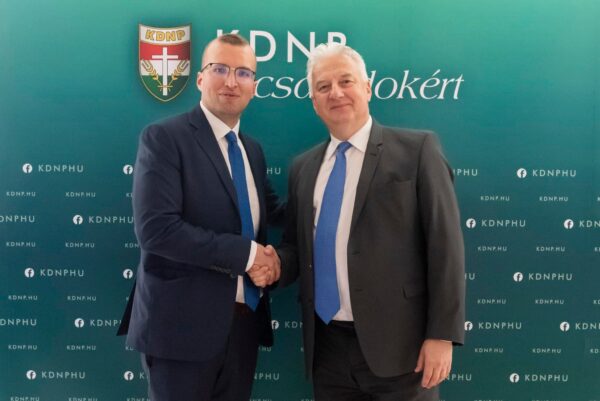
András Kiss and KDNP president Zsolt Semjén. Photo from Facebook
2. Ága-Boga Association of Large Families in Érd
The second largest recipient of funds is a subsidiary of the National Association of Large Families (NOE), a long-time ally of Fidesz-KDNP. The president of NOE, Katalin Kardosné Gyurkó, was Fidesz’s mayoral candidate in Érd (a town near Budapest) in 2024, and according to an interview with Magyar Nemzet, she was the founder of the Ága-Boga Association in 2006.
In 2020, Attila Bogatin, then president of the Érd association, campaigned for the ruling parties at a joint event with András T. Mészáros, the former Fidesz mayor of Érd. This caught the attention of the National Election Committee, which condemned the Érd local government newspaper for violating the principle of equal opportunity, among other things because of its coverage of this event.
3. Ung-Tisza-Szamos-Túr Border Region Tourism and Nature Conservation Association
The Ung-Tisza-Szamos-Túr Border Region Tourism and Nature Conservation Association received the third biggest sum of funds. This organization is also linked to the KDNP: according to its website and news, several of its events are organized in cooperation with the party’s youth wings, the Christian Democratic Youth Association (IKSZ), with whom they organized shared events.
The so-called touristic association also received funding from the Hungarian National Bank, as well as the KDNP party foundation, the Barankovics Foundation.
4. PolgárSág Civil Association
The Polgárság Civil Association in Győr, represented by Eszter Dunst, just missed out on the bronze medal. Dunst was also vice president and treasurer of the Women for the Hungarian Nation Public Benefit Association, which became famous in 2013 for listing false names equivalent to “John and Jan Doe” in its official paperwork.
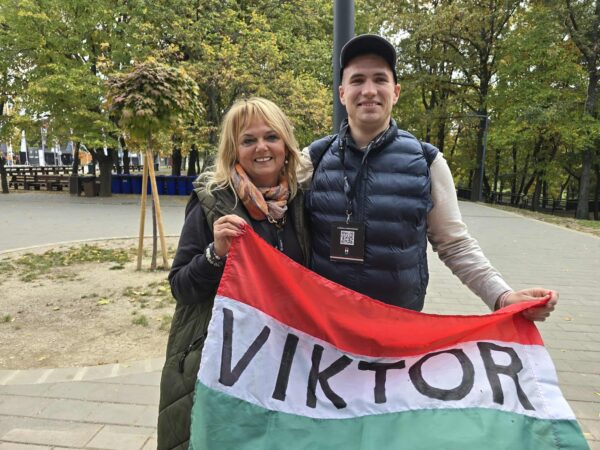
Eszter Dunst, representative of the PolgárSág Association. Photo: Facebook
Dunst ran in the 2010 municipal elections as a Fidesz candidate, and is listed as the author of a pro-government article titled “Dear Ms. Merkel!” Among other things, it stated that “It is not your way that is right, dear Ms. Merkel, but Viktor Orbán’s way. You, Ms. Merkel, could not even carry Mr. Orbán’s umbrella.”
5. Carpathian Euroregion Regional Development Public Benefit Association
The Carpathian Euroregion Regional Development Public Benefit Association, an organization dealing with cross-border cooperation, is linked to the Fidesz party organization of Szabolcs-Szatmár-Bereg County. It’s former president László Karakó was a Fidesz-KDNP MP, and its current president, Zoltán Gál, is the vice-president of the county assembly and deputy mayor of the town Szabolcs.
It is therefore not surprising that other Fidesz politicians often appear at the association’s events.
One of the association’s events in November 2022, which was funded by the NEA, resembled a small campaign rally:
István Simicskó, leader of the KDNP parliamentary group, Bence Rétvári, deputy minister of the interior, Lőrinc Nacsa, president of the Christian Democratic Youth Association, and Oszkár Seszták, former member of parliament (who is also a member of the aforementioned NOE), all spoke at the event.

Zoltán Gál with Minister János Lázár at the “Fight Club” rally, an idea conceived by Fidesz. Photo: Facebook
Noteworthy is the association’s project with the identification number NEAO-KP-1-2022/6-000752, for which they received 1.8 million forints from the NEA. According to the NEA database, the subject of the application was “Presentation of our common values along the border at the Carpathian House.” However, a report posted on the association’s website reveals that a completely different program was ultimately implemented with the grant: instead of presenting cross-border traditions in the Carpathian House, a conference was held with government officials (officially called “Local government meeting for local government leaders from abroad and Hungary”) at the expensive Hotel Helikon in Keszthely, near Lake Balaton.
“The opening speech of the conference was given by Deputy Prime Minister Dr. Zsolt Semjén. The second speaker of the evening was Dr. Tibor Navracsics, Minister of Regional Development, who shared his thoughts on “New Directions in Regional Development.” After the welcome speeches and opening presentations, dinner was served, during which Dr. János Latorcai, Deputy Speaker of the National Assembly, and Vince Szalay-Bobrovniczky, Deputy State Secretary for Civil and Social Relations, gave a toast. The day ended with a presentation by Dr. Csaba Latorcai, Deputy Minister of Regional Development, on “The Current Situation of the Prime Minister’s Office,”
the report reads.
8. Háló Community Development Catholic Association
The Háló Association, which received the eighth largest amount of money, is, as its name suggests, a Catholic organization involved in youth and cross-border community organizing. The association signed a strategic agreement with the government in 2012, and since then, Fidesz-KDNP politicians have participated in the association’s events on several occasions.
According to a 2023 report, State Secretary Miklós Soltész visited one of Háló’s camps, and State Secretary for Public Administration Csaba Latorcai gave a speech on the association’s 30th anniversary. In 2021, the Háló Association also participated in the National Forum of Christian Civil Organizations, which is organized annually in the Parliament by the Hungarian Christian Democratic Alliance, an organization within the KDNP.
11. Hungarian Women’s Advocacy Allience
Although it has just slipped out of the top 10, the Hungarian Women’s Interest Group, considered one of Fidesz’s veteran satellite organizations, also received a lot of support: its founder, Ilona Ékes, is also a founding member of Fidesz’s own women’s committee.
The organization’s president, Kinga Szőnyi, was one of the signatories of a letter calling for a pro-Orbán “peace march” in 2012, and later she often appeared at events and discussion series with Fidesz politicians and opinion leaders.
It is not surprising that the organization operates largely on budgetary support: according to one analysis, their revenue in 2022 was 46 million forints, of which 35 million forints was budgetary support—in contrast, their membership fee revenue was only 102,000 forints, which does not suggest that Hungarian women have joined the association en masse.
Like the Urban Civil Fund
Looking at the funding practices of the National Cooperation Fund, we can come to similar conclusions as in the case of the Urban Civil Fund (VCA), whose funding practices we reported on in detail in 2024.
The Urban Civil Fund, also distributed through the Bethlen Gábor Fund Management, has long been a means of financing organizations that are presented as civil society organizations but are in fact led by local Fidesz potentates. Grants from the Civil Fund were first disbursed in 2021 – the fund distributing state resources replaced the Norwegian Civil Fund, which was being phased out, and even then, most of the money went to organizations that were in fact linked to local Fidesz organizations.
Among the winners of the 2021 and 2022 tenders, we saw a significant number of foundations and associations led by Fidesz local government representatives and grassroots organization leaders. Many of these organizations later actively supported the ruling parties’ campaigns during the elections, and even civil society organizations that fielded joint candidates with the ruling parties received funding.
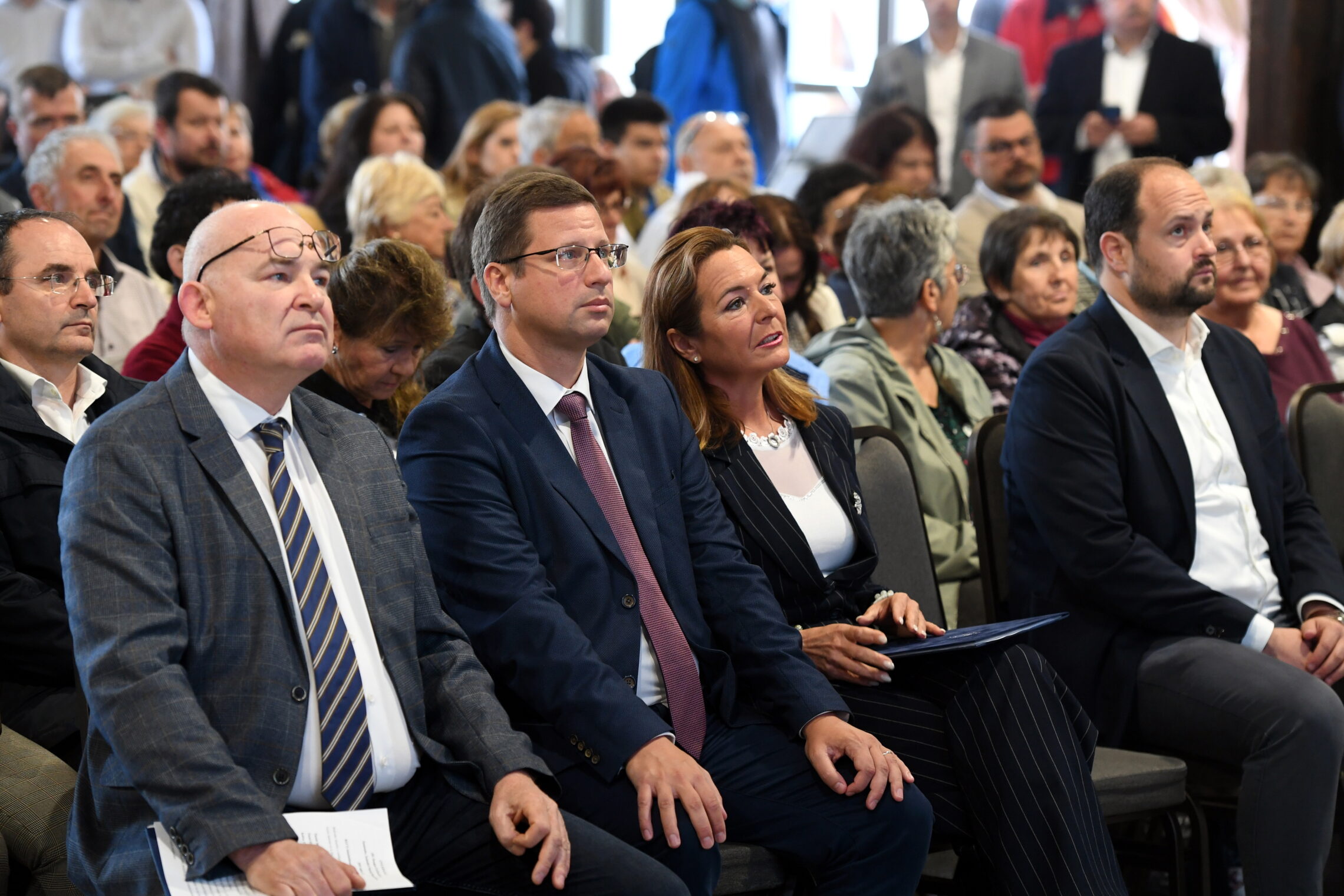
Written by Eszter Katus, Krisztián Szabó, Zalán Zubor, translated by Zalán Zubor. The original Hungarian version is here. Cover image: Vince Szalay-Bobrovniczky, Deputy State Secretary for Civil and Social Relations at the Prime Minister’s Office, Gergely Gulyás, Minister in charge of the Prime Minister’s Office, Eszter Vitályos, Fidesz Member of Parliament for the region, Government Spokesperson, and Lõrinc Nacsa, State Secretary for National Policy at the Prime Minister’s Office, at the opening of the Civil Kavalkád a Skanzenben (Civil Cavalcade at the Open-Air Museum) event at the Szentendre Open-Air Ethnographic Museum on May 12, 2025. MTI/Attila Kovács
Share:
Your support matters. Your donation helps us to uncover the truth.
- PayPal
- Bank transfer
- Patreon
- Benevity
Support our work with a PayPal donation to the Átlátszónet Foundation! Thank you.
Support our work by bank transfer to the account of the Átlátszónet Foundation. Please add in the comments: “Donation”
Beneficiary: Átlátszónet Alapítvány, bank name and address: Raiffeisen Bank, H-1054 Budapest, Akadémia utca 6.
EUR: IBAN HU36 1201 1265 0142 5189 0040 0002
USD: IBAN HU36 1201 1265 0142 5189 0050 0009
HUF: IBAN HU78 1201 1265 0142 5189 0030 0005
SWIFT: UBRTHUHB
Be a follower on Patreon
Support us on Benevity!
